
Treaty, Lands, and Resources (TLR) Department
Introduction
Members of səlilwətaɬ (Tsleil-Waututh Nation) are “People of the Inlet” and have used and occupied the lands and waters of səlilwət (Burrard Inlet) and surrounding watersheds since time out of mind. səlilwətaɬ holds inherent and longstanding Indigenous rights and title throughout our territory, including to the land – upland, intertidal, and submerged – water, air and resources therein. These rights are recognized and affirmed by Canada (Section 35 of the Constitution) as well as internationally (United Nations Declaration on the Rights of Indigenous People).
səlilwətaɬ has a profound obligation to both our Ancestors and future generations to protect and care for our water, land, air, and resources. Our teams within the Treaty, Lands, and Resources (TLR) Department combine Indigenous and western science to lead research, policy, and restoration projects to help clean up and protect səlilwət.
Project Highlights
These projects are led by our teams within TLR:
- Land, Water & Environment (LWE)
- Natural Resource Planning (NRP)
- Cumulative Effects Program
- Field Programs

(1) TWN Harvesting Survey: More than 200 səlilwətaɬ community members participated in our harvesting survey in Spring 2025. The information gathered through this survey helps us understand the Nation’s current and future harvesting and use of wild foods. This is important for shaping and guiding the work of TLR to support community harvesting opportunities.

(2) TWN Land Taken Up Maps: This map series illustrates various land- and marine-based impacts through the səlilwət catchment area. When all these layers are taken together, it shows that at least 93% of lands have been impacted by colonial development in ways that diminish, limit, or prevent exercise of our rights.

(3) Stewardship Interactive Map: We developed an interactive Stewardship Initiatives Map showing səlilwətaɬ habitat mapping, fish and wildlife monitoring, environmental data collection, and restoration projects.

(4) Cumulative Effects of Marine Shipping in səlilwət: Marine shipping is a major source of cumulative effects in səlilwət. We are assessing the cumulative effects of marine vessel traffic in the inlet to create a more comprehensive understanding of how, where, and to what extent vessel stressors affect important environmental and cultural values.
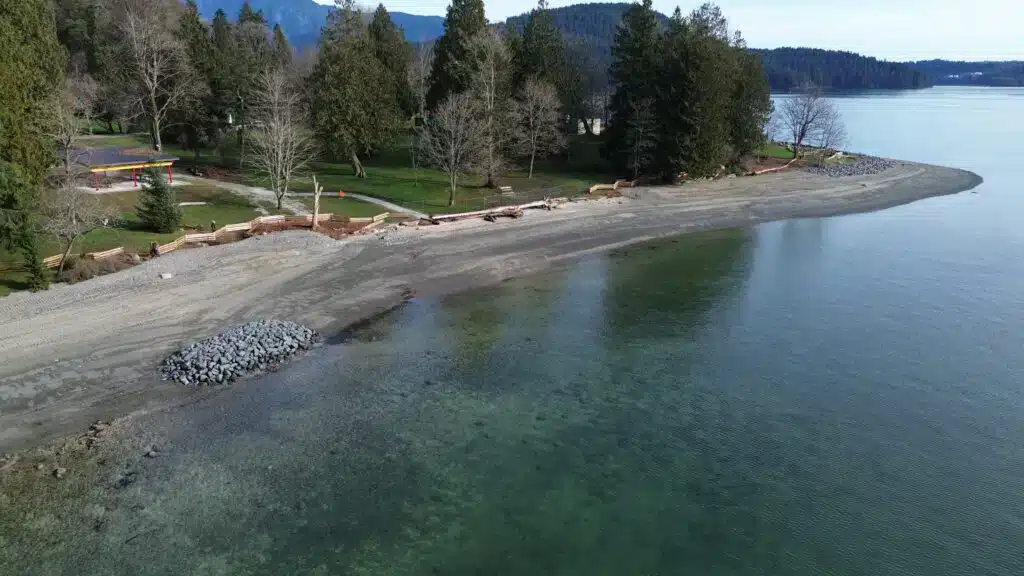
(5) Shoreline Restoration at Whey-ah-Wichen: We have nearly completed a major shoreline and upland restoration project at Whey-ah-Wichen. Through beach nourishment and upland improvements, this project aims to reduce the growing threat of rising sea levels, shoreline erosion, invasive species, and high foot traffic to sensitive archaeological and ecological sites.

(6) New Water Policy: More than 700 contaminants have been detected in səlilwət marine waters. Tsleil-Waututh Nation and the Province of BC have finalized new Water Quality Objectives as a major step towards improving ocean, stream, and stormwater health in səlilwət.

(7) q̓am̓ (Bull Kelp) Restoration: We partnered with the Kelp Rescue Initiative to develop restoration methods tailored to the unique conditions in səlilwət. The team successfully grew bull kelp at restoration sites in 2024 and summarized key findings, recommendations, and next steps in a Kelp Restoration Guidance Document.

(8) Elk Monitoring: Following the re-introduction of 20 Roosevelt elk to the Indian River Watershed in 2006, we partnered with BC to track elk health and movement and determine harvest rates. The team placed GPS collars and collected biological samples, which helps us monitor habitat use and understand impacts of human activity.
Our Work
Following Coast Salish protocols, we work to maintain and restore conditions in our territory that support our cultural practices, spiritual traditions, safe food harvesting, and responsible land and resource management.

The Indian River Watershed Integrated Stewardship Plan was developed by Tsleil-Waututh in partnership with the Province and signed in 2022. It is a government-to-government framework that sets out land use planning objectives and strategies for the Indian River Watershed.

The Burrard Inlet Action Plan was first published in 2017 as a founding guidance document for a new science-based, First Nation-led initiative to improve the health of səlilwət.
Our Food
When the tide goes out, the table is set
Tsleil-Waututh’s way of life depends on the community’s ability to sustainably manage and harvest healthy, abundant wild foods from səlilwət to feed the present community, ancestors, and other beings according to Tsleil-Waututh cultural and spiritual teachings and legal principles, and for the sale and trade of wild foods according to Coast Salish protocols and relationships.
Bringing Back Wild and Traditional Foods

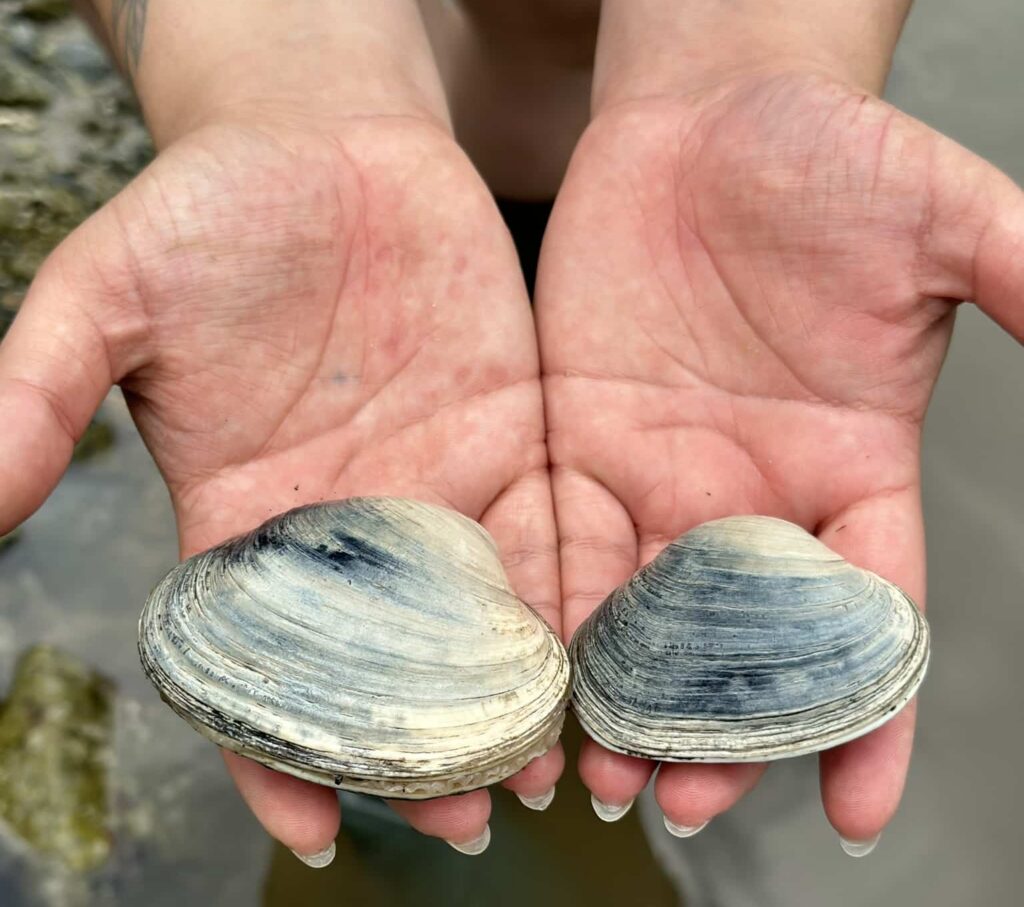
Clams: Clam harvesting has been closed in səlilwət since the 1970s due to contamination. Our ongoing clam work includes contaminant studies, clam garden restoration, more harvest openings and limited food harvest for the Tsleil-Waututh community. The harvest is now in its tenth year, and we are expanding our clam garden into sea garden restoration.

Herring: Herring have returned to Indian Arm after being extirpated by industrial dynamite fishing in the 1880s. Building on relationships with other Nations, we developed and implemented a herring monitoring plan, which includes spawn surveys to estimate population sizes and herring spawn habitat stewardship work. In 2024, Tsleil-Waututh Nation had its first small community harvest of herring after more than 100 years.

Elk: With direction from Tsleil-Waututh Nation’s Wildlife Working Group, we coordinate our Nation’s elk hunt and support hunters to bring wild meat to community freezers. After more than a century, the first community hunt in the Indian River Watershed took place in 2016. In spring 2025, we negotiated a hunting access agreement with Metro Vancouver for the Seymour Watershed, which had been closed to səlilwətaɬ access since the 1930s. The first limited community elk hunt in the Seymour was held in November 2025.

Salmon: Building on relationships with other Nations, we ensure salmon harvest and food fish for our community. Our Field Crew monitors salmon returns to help understand their health over the years. Salmon harvested in the territory is processed through canning, freezing, smoking, and more. This fish is regularly distributed to the community for food, culture, and ceremonial purposes. Collaboration with the TWN siʔáḿθət School and TWN Daycare allows for this knowledge to be shared and passed down.

Marine Birds: We collaborate with Birds Canada to conduct boat-based winter coastal waterbird surveys in səlilwət. Large data gaps exist in areas of the Inlet with low human population density or low access for birders. We are working to fill data gaps in Indian Arm by conducting surveys using methodology and training from Birds Canada.
Artist credit: Candace Thomas

Crabs: Tsleil-Waututh Nation and Fisheries and Oceans Canada tagged Dungeness crabs with acoustic trackers to study movement patterns and home ranges in səlilwət. We are also undertaking studies of contaminants in crabs to support ongoing community harvest.
Understanding Cumulative Impacts to Wild and Traditional Foods

Precontact TWN Diet – A Fish-Focused Menu
We reconstructed the ancestral Tsleil-Waututh diet from approximately 1000 CE up to early European contact in 1792 CE. Approximately 90-95% of protein in an ancestral səl̓ilwətaɬ diet came from marine and tidal sources, which demonstrates how extensively wild foods and resources have been lost in səlilwət. This study was carried out in collaboration with UBC researchers. Read article
Artist credit: Olivia George

Historical Ecology in səlilwət
In early post-contact times, səlilwət was exceedingly ecologically rich and marine food sources were healthy, diverse, abundant, and reliable. Various impacts, including overfishing, pollution and habitat loss caused substantial, and in many cases, total declines in populations of salmon, sturgeon, whales, herring, smelt, eulachon, groundfish, clams, crab, and waterfowl. Read article
Artist credit: Olivia George

Salmonid Collapse in səlilwət
Since the 1860s CE, salmonid stocks in surrounding rivers, creeks, and streams have decreased by 85-99%. Logging, dams, and estuary and channel modification have significantly contributed to collapsed salmon populations in the Seymour, Capilano and Indian Rivers, the largest rivers draining into səlilwət. Read article

Forage Fish Collapse in səlilwət
Examination of early fishery records and historical documents revealed peaks in landings of herring, smelt and eulachon, with sharp decreases in the early 20th century, leading to at least a 99% reduction in stocks. Due to the importance of forage fish in supporting higher trophic levels, the successive collapses of herring (1885 CE), eulachon (1899 CE) and smelt (1930s CE) may have been the most significant impacts to the entire marine ecosystem. Read article
Our Water
Healthy land and water = Healthy people
səlilwətaɬ has been leading a project, in collaboration with the Province of BC, to update and implement water quality policy for səlilwət. This is a high priority action item in our Burrard Inlet Action Plan and is an important step towards improving the water quality and health of səlilwət and protecting water values.
Protecting Water Values in səlilwət

Water Quality Policy: səlilwətaɬ and the Province of BC have co-signed an updated policy called Water Quality Objectives that defines how clean səlilwət water, sediment and seafood species must be to protect Water Values. Those Water Values are grounded on səlilwətaɬ values and adapted by a multi-sector Roundtable convened by səlilwətaɬ.

Interactive Tools and Educational Materials: Explore our interactive map on colonial impacts affecting water quality in səlilwət, and our stormwater storymap showing the impacts of polluted runoff on səlilwətaɬ’s way of life. Check out our data dashboard and contaminant heat maps for displays of selected contaminants in different parts of səlilwət. Our guides for researchers/educators/NGOs, industry, and governments, and one-page outreach guide explain how to apply the Water Quality Objectives.
Artist credit: Olivia George

Pollution Reports: səlilwətaɬ and the Province of BC have co-produced several detailed reports about contaminants in səlilwət. səlilwətaɬ has published a report describing the impacts of contamination on our safe harvesting practices.

Before You Monitor Water Quality in səlilwət: Please consult səlilwətaɬ’s reports on the needs for coordinated monitoring and research in səlilwət, and our monitoring guidance report produced with the Province of BC.
Artist credit: Jordan Gallie, Olivia George and Candace Thomas
Understanding Cumulative Impacts to Water Values in səlilwət

Erosion and Sediment Transport Study
A model was developed to analyze sediment transport pathways in səlilwət. When this model was run with the precontact shoreline, before colonial modifications, sediment that was eroded from shore was likely to be redeposited back on nearby shorelines; however, in 2019, the model indicated that sediment eroded from shore was likely to be deposited in deep eddies and lost to the seafloor. This shift over time has disrupted a stable balance of sediment erosion and deposition. Read Report

Vessel Wake Study
The findings of this study demonstrate that vessels in səlilwət are increasing the overall wave energy beyond natural wind-generated waves, with the increase in probability ranging from 1.2 to 4.6 times depending on the location. On a per wake basis, tankers on their own are the most likely type of vessels to produce the most powerful waves in front of the TWN reserve. Read Report

Stormwater Inputs to səlilwət
There are more than 1,200 outfalls of various kinds (e.g., stormwater outfalls, provincially authorized discharges, and combined-sewer overflow discharges) in səlilwət. They fall under various jurisdictions (e.g., municipal, provincial, Port). Stable isotope and fatty acid analyses indicate that wastewater inputs constitute a greater proportion of zooplankton diets than freshwater inputs in səlilwət, despite being in a rainforest biome with numerous rivers and inputs from the Fraser River. Read Report
Our Habitats
Care for səlilwət, səlilwət will take care of you.
We monitor and restore vital habitats—supporting our terrestrial and aquatic relatives. Our field crew keeps constant watch over the Inlet through annual field programs such as fisheries in the Indian River, clam surveys, water quality sampling throughout the Inlet, and maintaining the Say Nuth Khaw Yum Provincial Park campsites. Our data helps inform action and push for long-term restoration. Take a look at our projects on this interactive stewardship initiatives map.
Monitoring and Restoring Vital Habitats

Indian River Watershed Restoration Projects: Since 2022, TWN has completed restoration of three spawning and rearing channels: Brandt Channel, 5k Channel, Elk slough; an engineered log jam structure at ‘Old River’; and an emergency drought response on the mainstem.
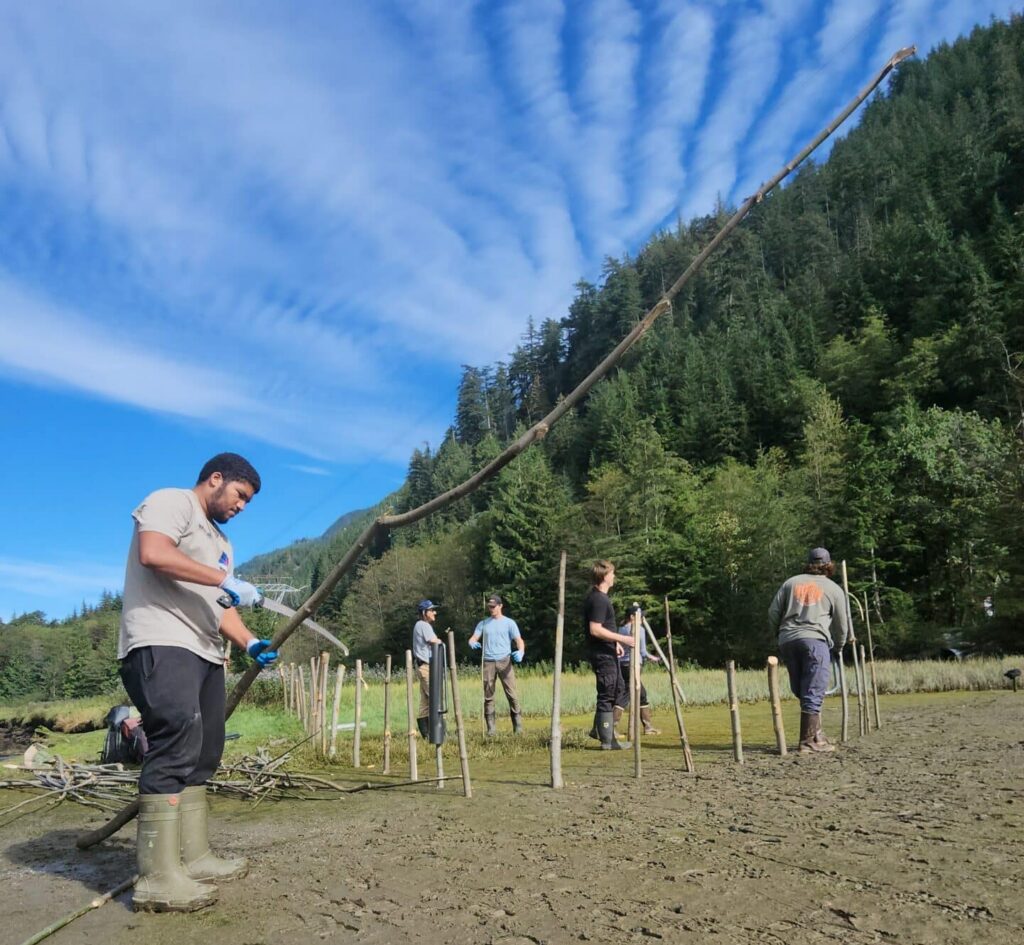
Goose Exclosure: We are monitoring Canada goose populations in the Inlet and documenting the negative effects of overgrazing on the Indian River estuary. We have installed eco-cultural goose exclosure fencing to reduce grazing pressures on estuarine restoration.

Wolf Habitat Monitoring: We are working with Raincoast Conservation to develop a Relationship Plan for the returning wolf population in the Indian River Watershed. Our plan includes increased camera monitoring and collection of wolf scat to better understand their diets and genetic makeup. Mapping of wolf habitat is ongoing.
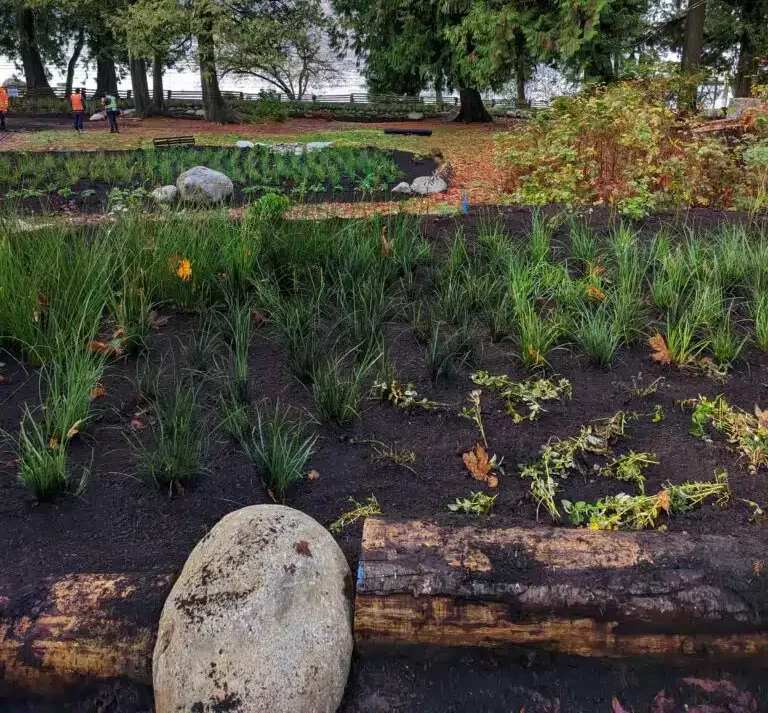
Whey-ah-Wichen Shoreline Restoration: We have nearly completed a major restoration project at Whey-ah-Wichen. Through beach nourishment and upland improvements, this project aims to reduce the growing threat of rising sea levels, shoreline erosion, invasive species, and high foot traffic to sensitive archeological and ecological sites. New rain gardens have been created to intercept runoff and improve the quality of the water flowing into the inlet.

q̓am̓ (Bull Kelp) and cə́ləm (Eelgrass) Mapping: To understand the present-day extent of bull kelp and eelgrass within səlilwət and identify potential areas for restoration, we mapped eelgrass in partnership with SeaChange Marine Conservation Society from 2015 to 2021 and mapped bull kelp from 2017 to 2020. Future work aims to remap priority areas to inform restoration planning.

q̓am̓ (Bull Kelp) Restoration: In partnership with the Kelp Rescue Initiative, we successfully grew bull kelp at Whey-ah-Wichen and New Brighton Park in 2024 providing important habitat for marine life. This work is summarized in the Kelp Restoration Guidance Document released in 2026. Future work aims to increase community involvement by developing less diver- and lab-reliant methods.
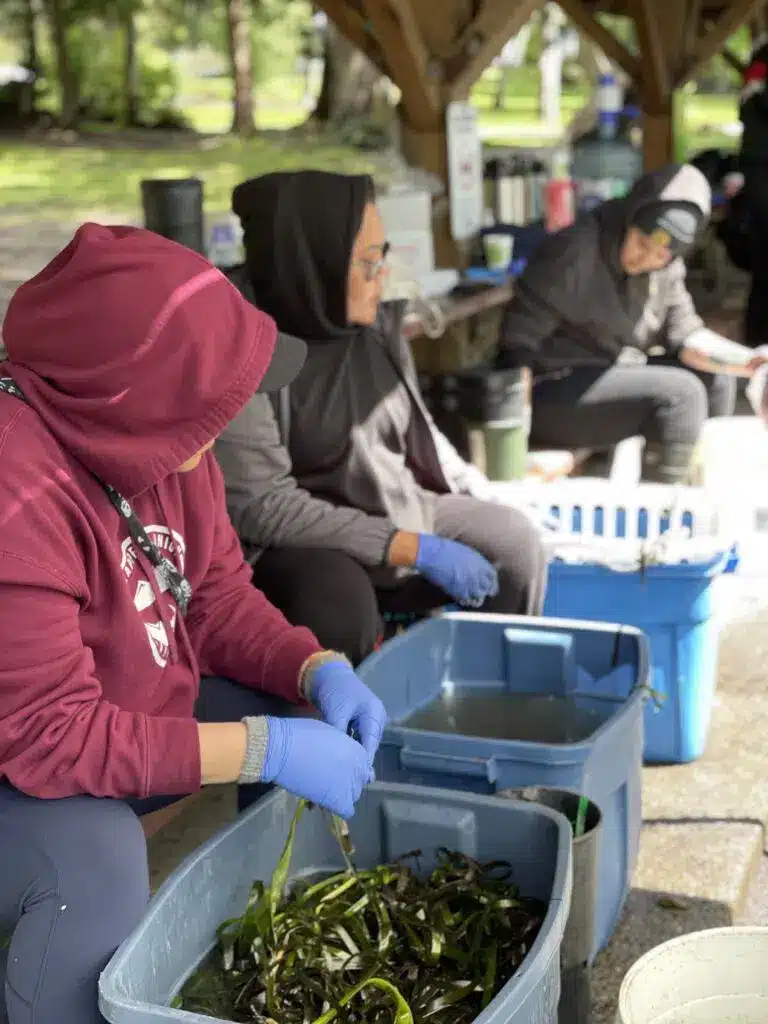
cə́ləm (eelgrass) Restoration: From 2015 to 2022, in partnership with SeaChange Marine Conservation Society, we transplanted 4,010 eelgrass shoots to restore marine ecosystems along the TWN Reserve and adjacent shorelines. We also completed an eelgrass seeding pilot project with DFO in 2025 to explore restoration methods that do not rely on harvesting from donor eelgrass beds.
Understanding Cumulative Impacts on Vital Habitats

Precontact Ecosystem Model – Unsettling the Record
Using ecosystem models, we recreated the səl̓ilwət ecosystem before European contact, which depicted the Inlet as a rich, diverse, abundant and stable ecosystem that supported up to 10,000 Tsleil-Waututh ancestors. We then modeled select environmental stressors and the devastating loss of səl̓ilwətaɬ life caused by colonization from 1750–1980 CE. Our results show an estimated loss of 88% of harvestable biomass from səlilwət. This study was carried out in collaboration with UBC researchers.

Pre-Contact Shoreline of səlilwət
This study demonstrates that across səlilwət a total of 1,214 ha of intertidal and subtidal areas have been lost to development and change, including 55% (945 ha) of the inlet’s intertidal areas. The most severe shoreline alteration occurred in False Creek and the Inner Harbour: False Creek Flats (>99% intertidal area lost), the Capilano River Estuary (80% intertidal area lost), and the Seymour-Lynn Estuary (56% intertidal area lost).
Revitalizing Our Cultural Practices
Tsleil-Waututh will always be here
For Tsleil-Waututh, cultural health is inextricable and deeply interconnected with environmental health, and our stewardship obligation includes the responsibility to maintain conditions that provide the cultural foundation the Nation requires to thrive. We must ensure that Tsleil-Waututh territory allows community members to live by, understand, and pass down Tsleil-Waututh cultural protocols and ways of life.
To do this, we are supporting land-based cultural revitalization initiatives and improving access to the inlet, harvesting locations, and sacred spaces for Tsleil-Waututh people.
Supporting Tsleil-Waututh’s Connection to səlilwət

TWN Harvesting Survey: More than 200 TWN Community Members participated in our harvesting survey in Spring 2025. Over 80% of respondents want to harvest more, process more, and eat more wild and traditional foods. Top barriers preventing TWN Community Members from harvesting and eating more wild foods are related to knowledge and transportation. The information gathered through this survey helps us understand TWN’s current and future harvesting and use of wild foods. This is important for shaping and guiding the work of TLR to support community harvesting opportunities.
Artist credit: Olivia George

Community Trips to Ancestral Village Sites: We organize community trips to important ancestral village sites to strengthen Tsleil-Waututh members’ connection to the land and water. For the last two years, with funding from Metro Vancouver, we organized boat trips from Whey-ah-Wichen to təmtəmíxʷtən for the community and TWN School to reconnect and learn about one of TWN’s largest ancestral villages. With support from the Vancouver Park Board and City of Burnaby, we organize annual events at other village sites like Xway Xway (Stanley Park) and saltaɬ (Barnet Marine Park).

Ancestral Salmon Stewardship Practices: Through archaeological research, we have demonstrated multiple practices that TWN Ancestors employed to ensure sustainable salmon harvesting, including species-selective and sex-selective fisheries. Ancient DNA and collagen analysis of salmon bones from archaeological sites have demonstrated preferential harvesting of chum salmon, which preserves exceptionally well when smoked, at specific locations for over 3000 years. Additionally, TWN Ancestors preferentially harvested male salmon, which allows a larger sustainable harvest than if females and males are harvested equally.

Clam Tending Practices: TWN conducts regular work to steward and tend to important clam beaches in support of an ongoing harvest. This supports TWN stewardship by connecting the community to wild foods to which they have had limited access since the clam harvest closure in the 1970s. Active work on the beach carried out by staff and the TWN siʔáḿθət School helps realize restoration efforts and long-term goals of expanding the clam harvest and reconnecting to beaches.
Leading Stewardship in Our Territory
We came from səlilwət, we are responsible for it
Decisions and authority regarding lands, waters, resources and culturally important places in our territory must support our stewardship obligation and consider the environmental, cultural, social, economic and governance interests that are required for our Nation to thrive for generations to come. Other governments need to recognize and respect our decision-making authority and ensure that our Nation has a seat at key decision-making tables.
Making Decisions in səlilwət
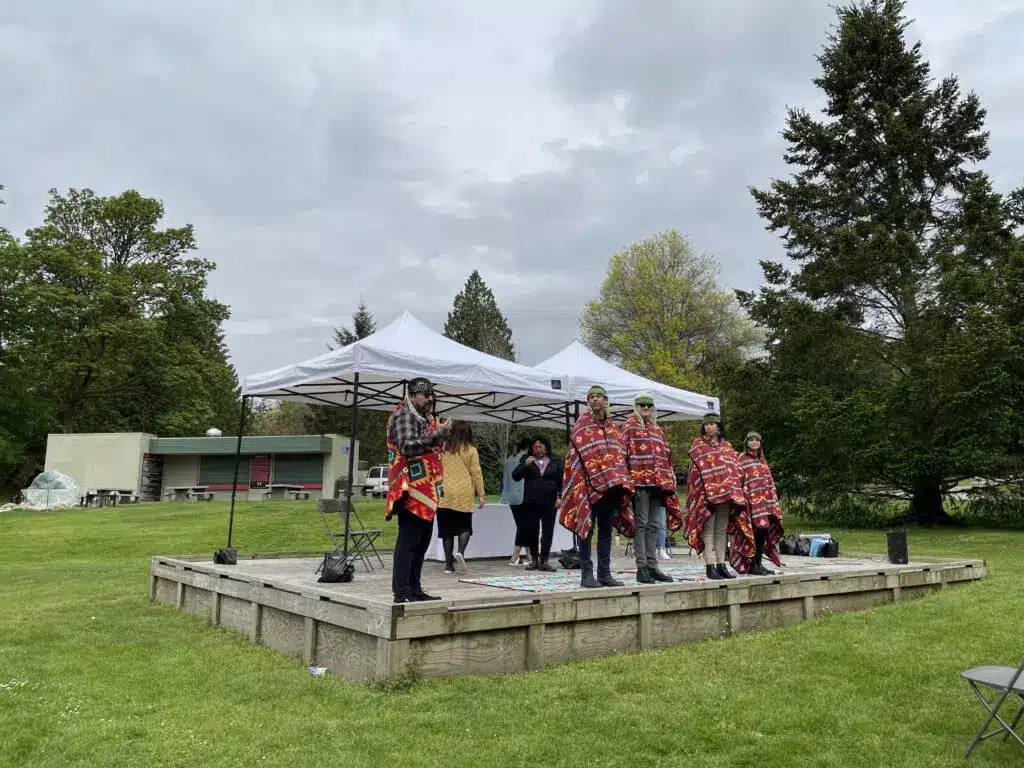
Co-decision-making with Canada: Under a landmark agreement for collaborative decision making, Tsleil-Waututh Nation and Environment and Climate Change Canada have been working together to protect the marine environment, to promote the sustainable use and stewardship of marine resources, and to use rigorous, evidence-based science in both Western and Indigenous disciplines to make effective recommendations to prevent, reduce, and where able, eliminate pollution caused by the dumping at sea of sediment or other matter at Point Grey. All permits for disposal at sea at Point Grey now undergo a shared decision-making process between Canada and Tsleil-Waututh Nation.
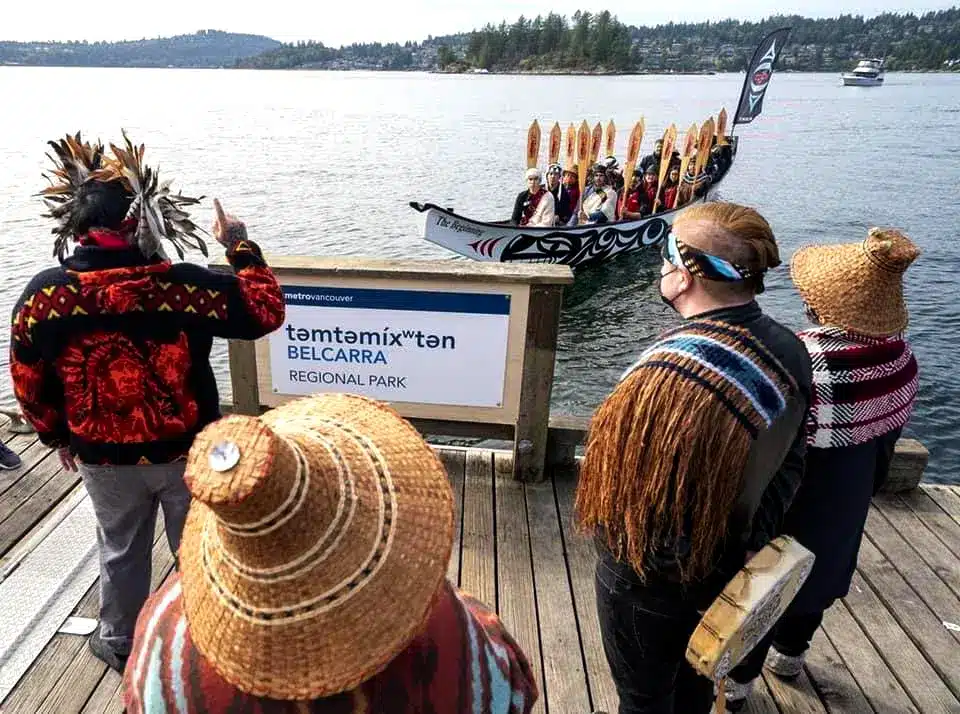
Co-Management and Collaborative Stewardship: We collaboratively co-manage multiple protected areas in TWN’s core territory to support TWN’s reconnection and reclaiming of these areas: Stanley Park, Say Nuth Khaw Yum Provincial Park, Whey-ah-Wichen (Cates Park), təmtəmíxʷtən (Belcarra Regional Park), and saltaɬ (Barnet Marine Park), Stanley Park, as well as the Indian River Watershed. Through co-management we work to increase Tsleil-Waututh Nation’s visibility, use, and access to these important places and ensure that our Nation has a seat at the planning, implementing and decision making table.

Bedwell Bay No-Anchor Zone and cə́ləm (Eelgrass) Protection: Three buoys were installed to mark a voluntary no-anchor zone, protecting sensitive eelgrass beds thanks to our Nation’s advocacy. Tsleil-Waututh Nation convened leaders from around the Inlet to explore this, and other needed protection strategies for the eelgrass meadow in Bedwell Bay.

Indian River Watershed Integrated Stewardship Plan: Rooted in TWN oral history and stewardship responsibilities, the Indian River Integrated Stewardship Plan reflects the Nation’s long-standing commitment to caring for its lands and waters. In partnership with the Province of BC, TWN helped pioneer one of the province’s first Indigenous-led collaborative stewardship plans and continues to work to restore watershed health and protect TWN’s way of life.

Timeline of Impacts and Stewardship Work in səlilwət: We have produced a comprehensive timeline of impacts and stewardship work in səlilwət spanning three eras: precontact era (where we came from), colonial era (where we have been), and beginnings of TLR era (where we are now).

TWN Lands Taken Up Maps: This map series illustrates various land- and marine-based impacts in the səlilwət catchment area using readily available information and public data. When all these layers are combined, it shows that at least 93% of lands have been impacted by colonial development in ways that diminish, limit, or prevent exercise of our rights.
Recent Reports and News
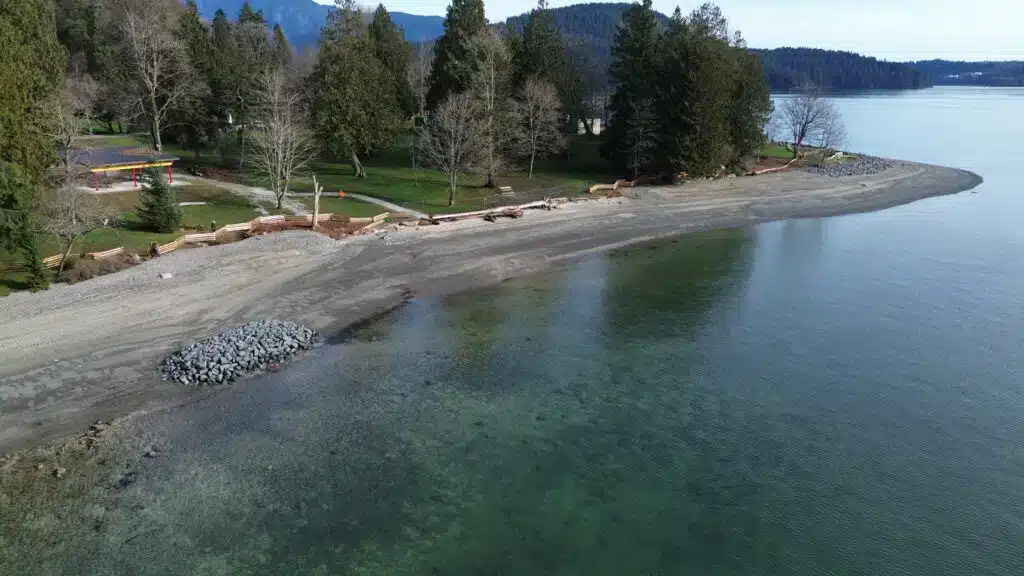
Phase 1 of Whey-ah-Wichen Shoreline Restoration Complete
The səlilwətaɬ (Tsleil-Waututh Nation) Natural Resource Planning Team is pleased to announce that Phase 1 of the Whey-ah-Wichen Shoreline Restoration Project is complete! The second and final phase of the project, which will address erosion at Little Cates, will begin at the end of the summer.

q̓am̓ (Kelp) Restoration Guidance Document Developed for səlilwət (Burrard Inlet)
səlilwətaɬ (Tsleil-Waututh Nation)’s Treaty, Lands and Resources (TLR) Department, in partnership with the Kelp Rescue Initiative, have developed key findings, recommendations, and next steps for q̓am̓ (bull kelp) restoration and offsetting work in səlilwət (Burrard Inlet).
A Major Win Towards a Cleaner Inlet!
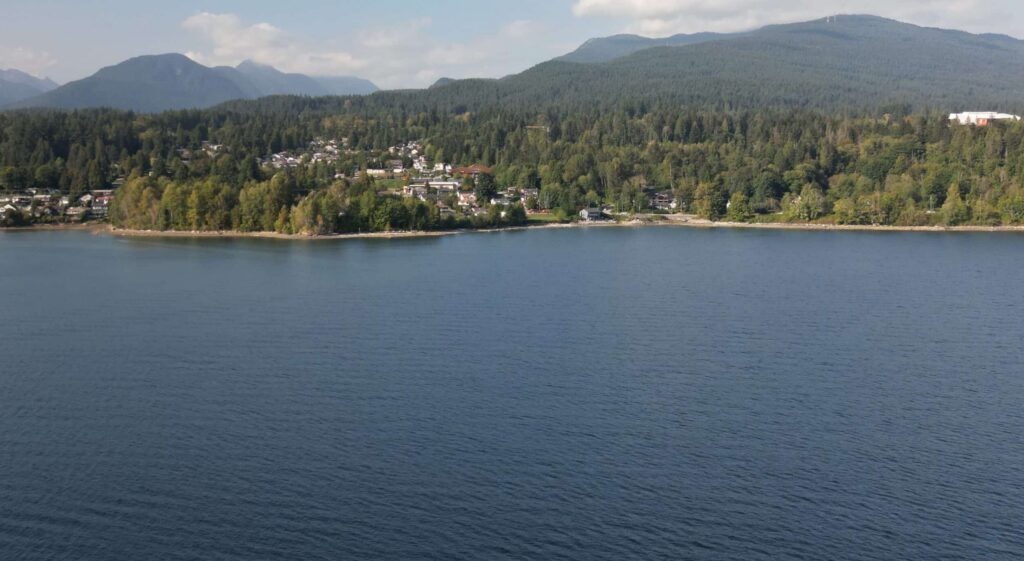
səlilwətaɬ (Tsleil-Waututh Nation) and the Province of BC have co-developed and co-signed an updated marine water quality policy, called xaɬəmət ct tə səlilwət / Water Quality Objectives for səlilwət (Burrard Inlet).
To view a longer list of public documents produced by and for Tsleil-Waututh Nation, click here.