q̓am̓ (Kelp) Restoration Learning Day at Whey-ah-Wichen (Cates Park)
q̓am̓ (Kelp) Restoration Learning Day at Whey-ah-Wichen (Cates Park)
News & Updatesq̓am̓ (Kelp) Restoration Learning Day at Whey-ah-Wichen (Cates Park)
q̓am̓ (Kelp) Restoration Learning Day at Whey-ah-Wichen (Cates Park)
səlilwətaɬ (Tsleil-Waututh Nation)’s Treaty, Lands and Resources (TLR) Department hosted a q̓am̓ (Kelp) Restoration Learning Day for TLR Youth Interns and TWN Youth Garden Interns on August 27, 2026. Interns learned about the kelp restoration process and supported staff in planting 40 bull kelp spore-seeded rocks to a restoration site at Whey-ah-Wichen (Cates Park).
Picnic Shelter at Whey-ah-Wichen (Cates Park)
Kelp in the pool
Building on previous kelp restoration work led by TLR which identified methods for successfully growing bull kelp in səlilwət (Burrard Inlet), this project is exploring ways of making kelp restoration more accessible and cost-effective. This includes reducing reliance on specialized laboratory equipment and SCUBA diving, while creating more opportunities for TWN community involvement.
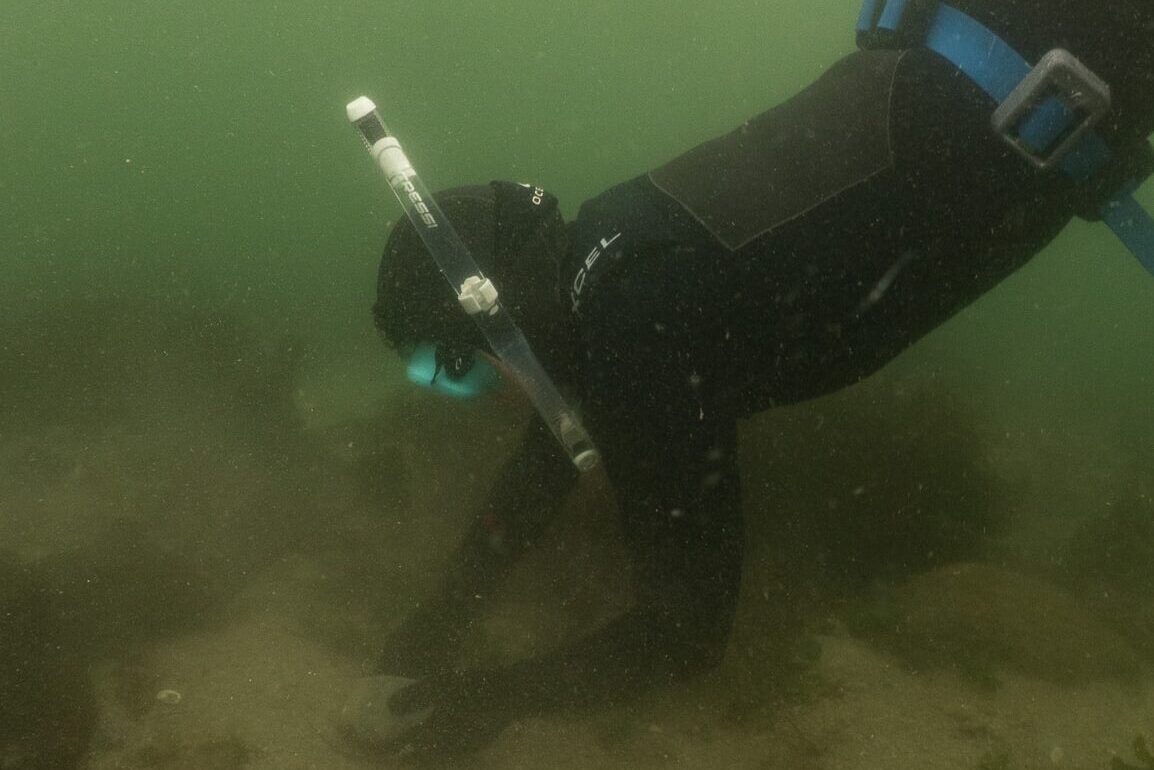
To do this, TLR, with support from the Martone Lab at the University of British Columbia (UBC), is undertaking a kelp restoration methods trial along TWN reserve and Whey-ah-Wichen shorelines that plants kelp at its spore stage and uses snorkelers for in-water work.
The Kelp Restoration Learning Day was an exciting component of this work! The day focused on facilitating active participation of TWN youth in kelp restoration and learning on the beach. Through providing opportunities for direct involvement in stewardship work, TLR hopes to connect youth to səlilwət (Burrard Inlet) and the need to restore and protect it for future generations.
TWN staff, interns, and collaborators learned about bull kelp and its unique life cycle. Bull kelp has several life stages from a spore stage invisible to the naked eye (microscopic) to the large kelp that is visible from the ocean surface! Understanding this life cycle helps us work with kelp’s natural processes to support restoration and the recovery of these important ecosystems. Learn more about bull kelp and its life cycle here!
Together, we collected rocks from the beach, settled kelp spores on these rocks, and planted the kelp-seeded rocks in the ocean. The planted kelp will remain microscopic throughout the fall and winter, and in early spring, TLR will monitor the planted rocks for visible kelp.
TWN Garden Interns getting a closer look through the microscope, imagining how kelp spores could grow into adult bull kelp one day.
The team working together to pour the “kelp spore soup” on the rocks collected from the beach.
TWN staff, interns, and collaborators placing the kelp spore-seeded rocks in mesh totes with pool noodles and carrying them down the beach.
Snorkelers swimming kelp spore-seeded rocks to the restoration site and placing them on the seafloor.
Experimenting with new restoration methods creates opportunities to build on existing knowledge and learn across knowledge systems. By bringing together TWN knowledge, scientific research, and hands-on experience, we can explore new approaches to restoration. There is so much kelp can teach us!
This work is funded by the City of Vancouver and the Burrard Inlet Environmental Science and Stewardship Agreement with in-kind funding from the Martone Lab.For more information about TLR’s kelp restoration and stewardship efforts, please contact Camryn Good, Environmental Specialist – Land, Water, and Environment, at camryngood@twnation.ca.
Gordon Kris Dick is a səlilwətaɬ (Tsleil-Waututh) mixed-media artist, centering his craft around themes of healing, resilience, connection, and hope. Presented in collaboration with the səlilwətaɬ (Tsleil-Waututh) Nation, Dick’s selected work blends Japanese anime-style art with Coast Salish influences to connote balance, community, and the guidance of ancestors.
After moving away from the Tsleil-Waututh Nation reserve in 2024, Jeffrey Hernandez was looking for an opportunity to reconnect with the lands and waters of his traditional territory through boots-on-the-ground stewardship work.
In her feature for the North Shore News, Michelle George, Deputy Director of Tsleil-Waututh Nation’s Language, Culture, and Protocol Department, reflects on the lasting intergenerational impacts of Residential Schools and the role that language, culture, and community play in healing journeys.
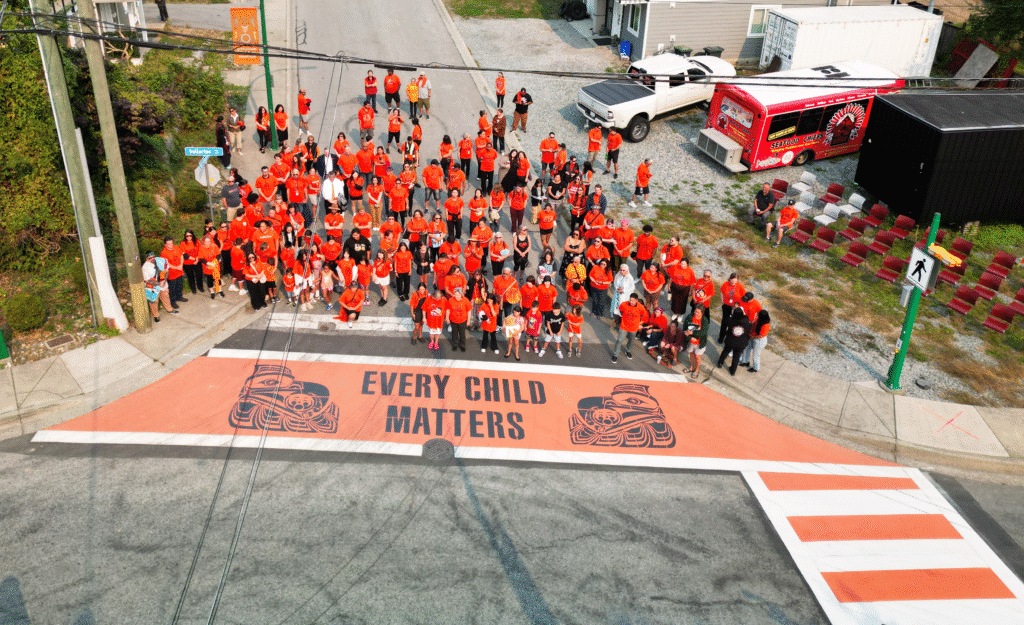
This Orange Shirt Day (National Truth and Reconciliation Day), we are uplifting one another and sharing resources on raising awareness and demonstrating allyship with Indigenous communities.
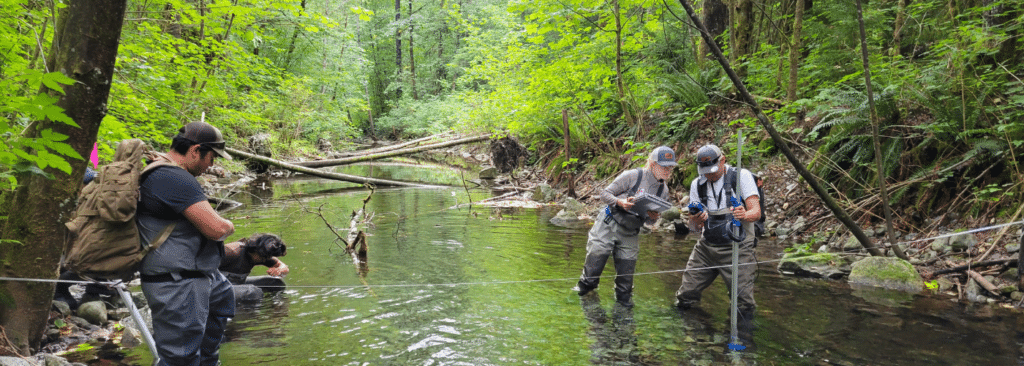
A new technical report finds that salmon rely on a diverse network of habitats across xʔəl̓ilwətaʔɬ (the Indian River Watershed), with different habitat types providing important functions at different stages of their life cycle.