səlilwətaɬ (Tsleil-Waututh Nation)’s Treaty, Lands and Resources (TLR) Department worked in partnership with the Kelp Rescue Initiative (KRI) on q̓am̓ (bull kelp) restoration at Whey-ah-Wichen (Cates Park) and New Brighton Park in 2023 and 2024.
The team successfully grew bull kelp that persisted throughout the summer and was utilized by a variety of fish and invertebrates (see video below). This project was funded by the City of Vancouver, World Wildlife Fund Canada, KRI and the Burrard Inlet Environmental Science and Stewardship Agreement.
Watch a short video below:
Kelp forests are highly productive coastal ecosystems providing critical habitat for traditionally harvested food sources such as sce:ɬtən (salmon), sɬewət̕ (herring), and crabs. Traditionally, kelp was used during a variety of practices including both the preparation and preservation of food and to help paddlers read the water currents.
As a result, kelp forests play a key role in the Nation’s collective understanding of its territory: kelp is part of what makes Burrard Inlet home for Tsleil-Waututh. Kelp forests have seen declines since European contact; however, Nation Members can still remember a time when the water was so thick with kelp that it was difficult to paddle through.
Today, in addition to impacts from urbanization, kelp forests in Burrard Inlet face warming ocean temperatures and marine heatwaves that have led to declines in kelp forests both globally as well as locally in the Salish Sea. While many groups are working on kelp restoration in British Columbia, there is no clear bull kelp restoration approach that can be applied across the region. TLR was interested to develop methods that can be successful in Burrard Inlet to address both historical and recent declines and to encourage industry to undertake bull kelp restoration during offsetting projects.
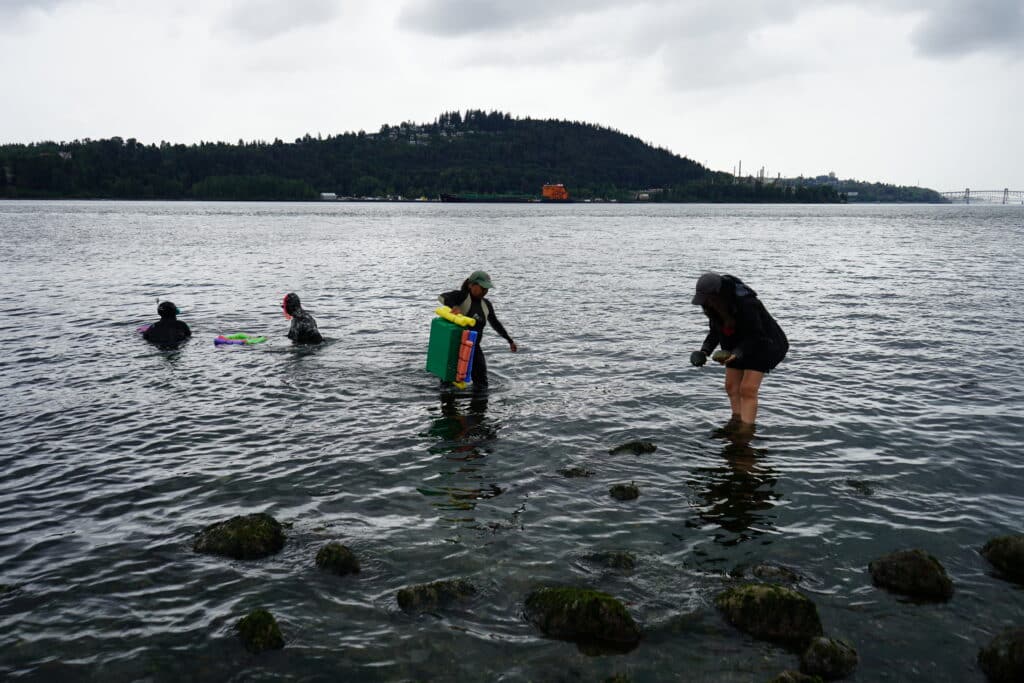
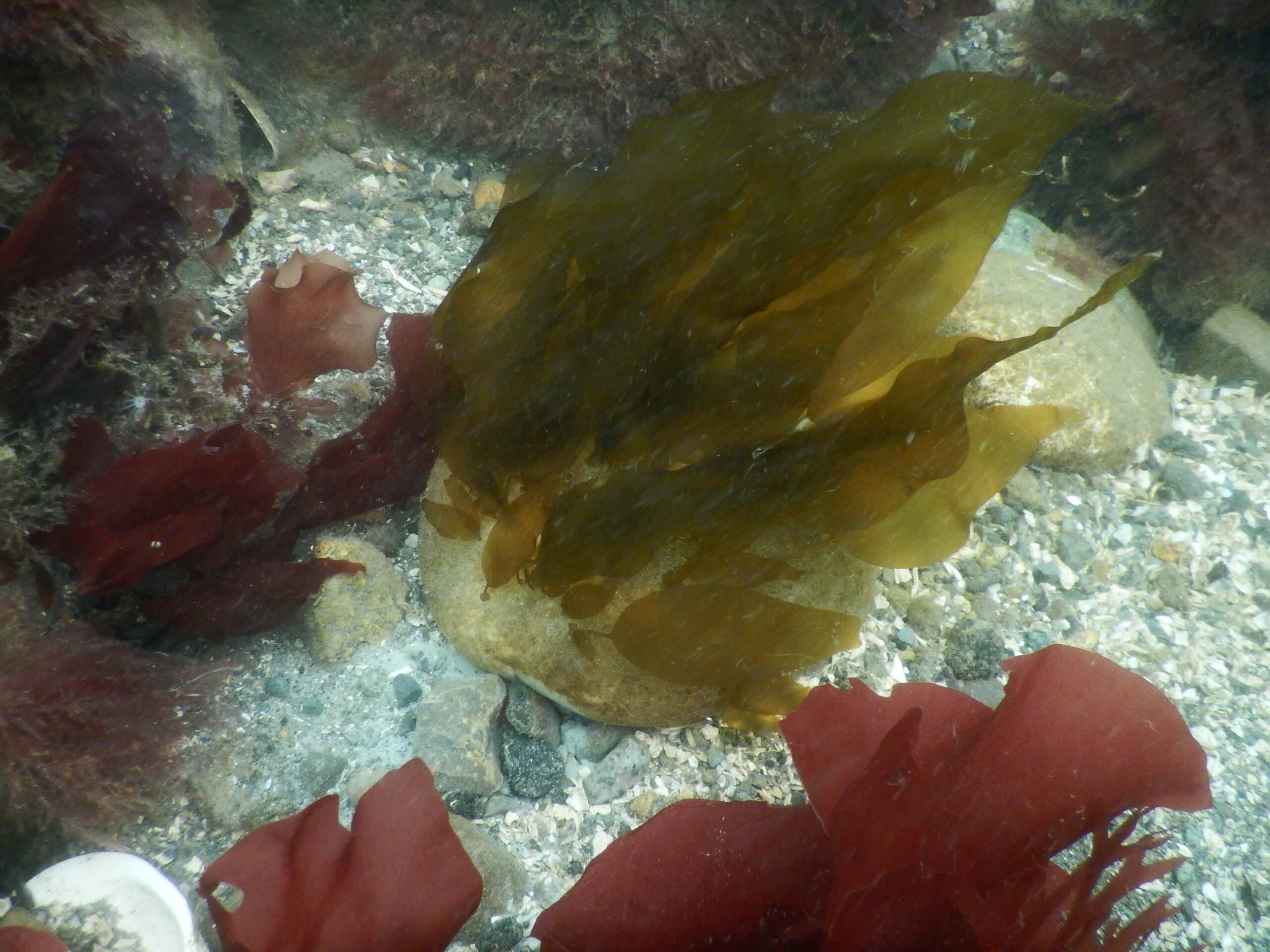
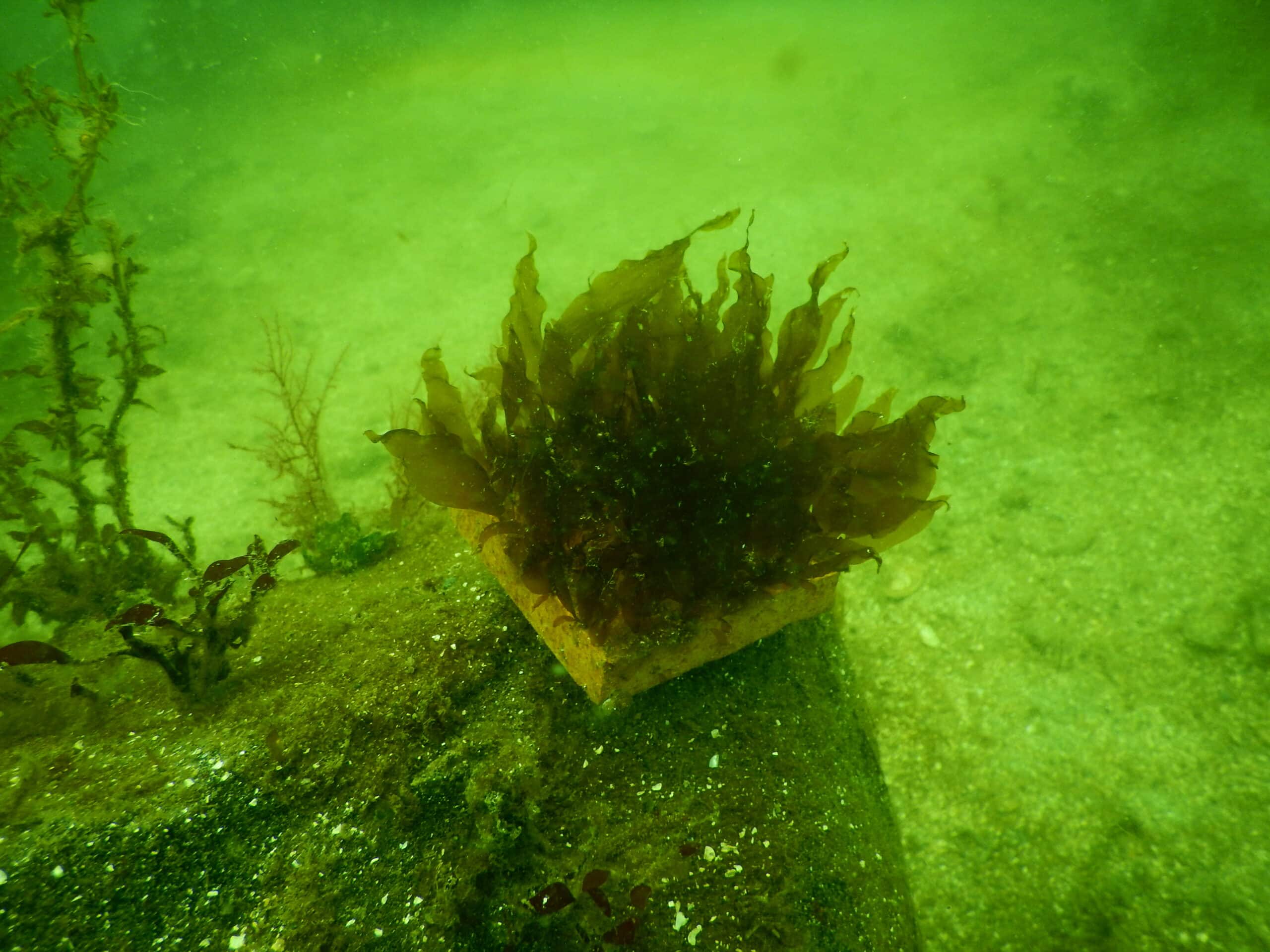
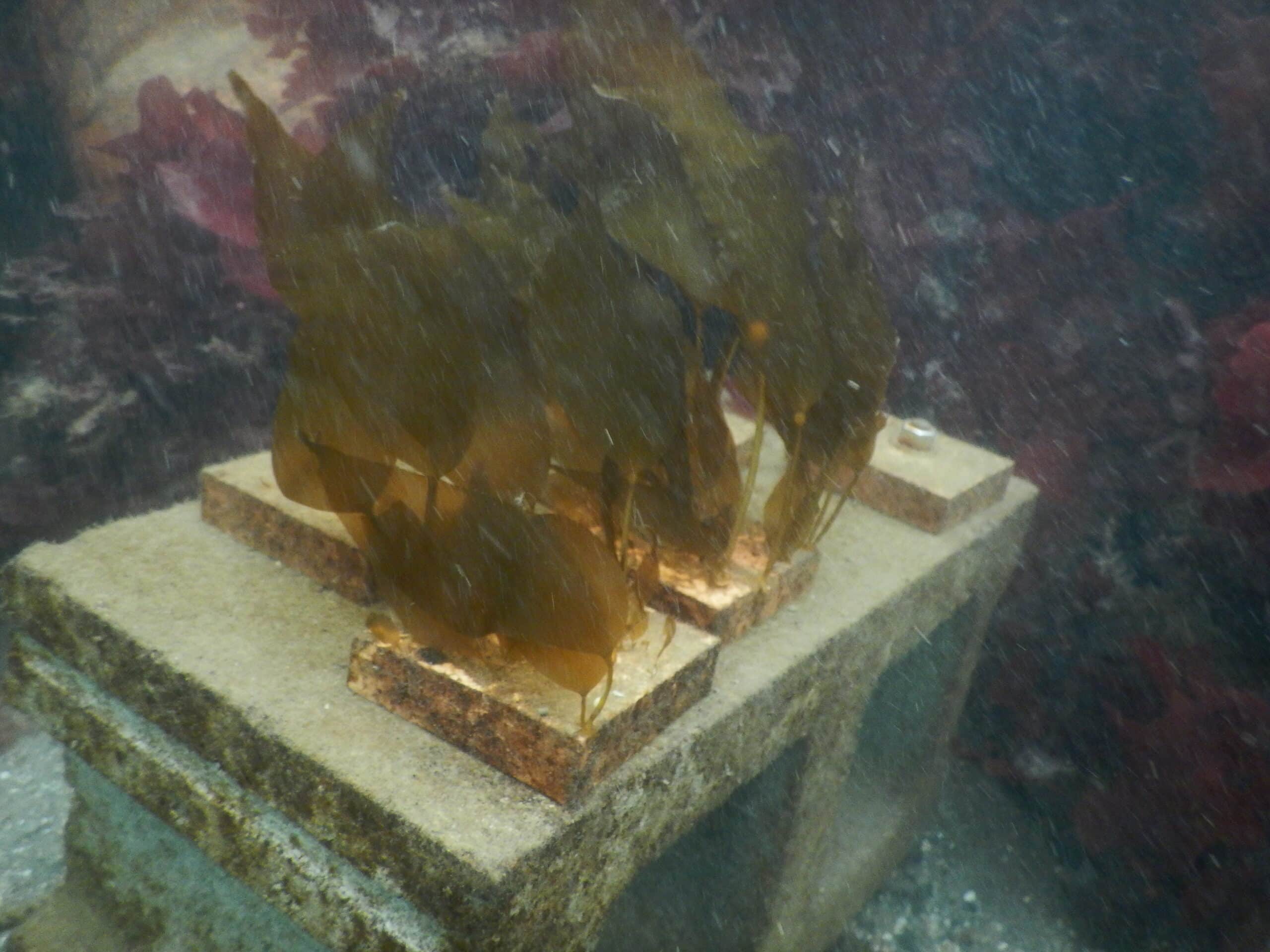
For this restoration project, divers were used to trial three different approaches:
- juvenile kelp growing on rocks placed on the seafloor (upper left photo);
- juvenile kelp growing on clay tiles glued to the seafloor (upper right photo); and
- juvenile kelp growing on clay tiles bolted to concrete blocks, placed on the seafloor (bottom left photo).
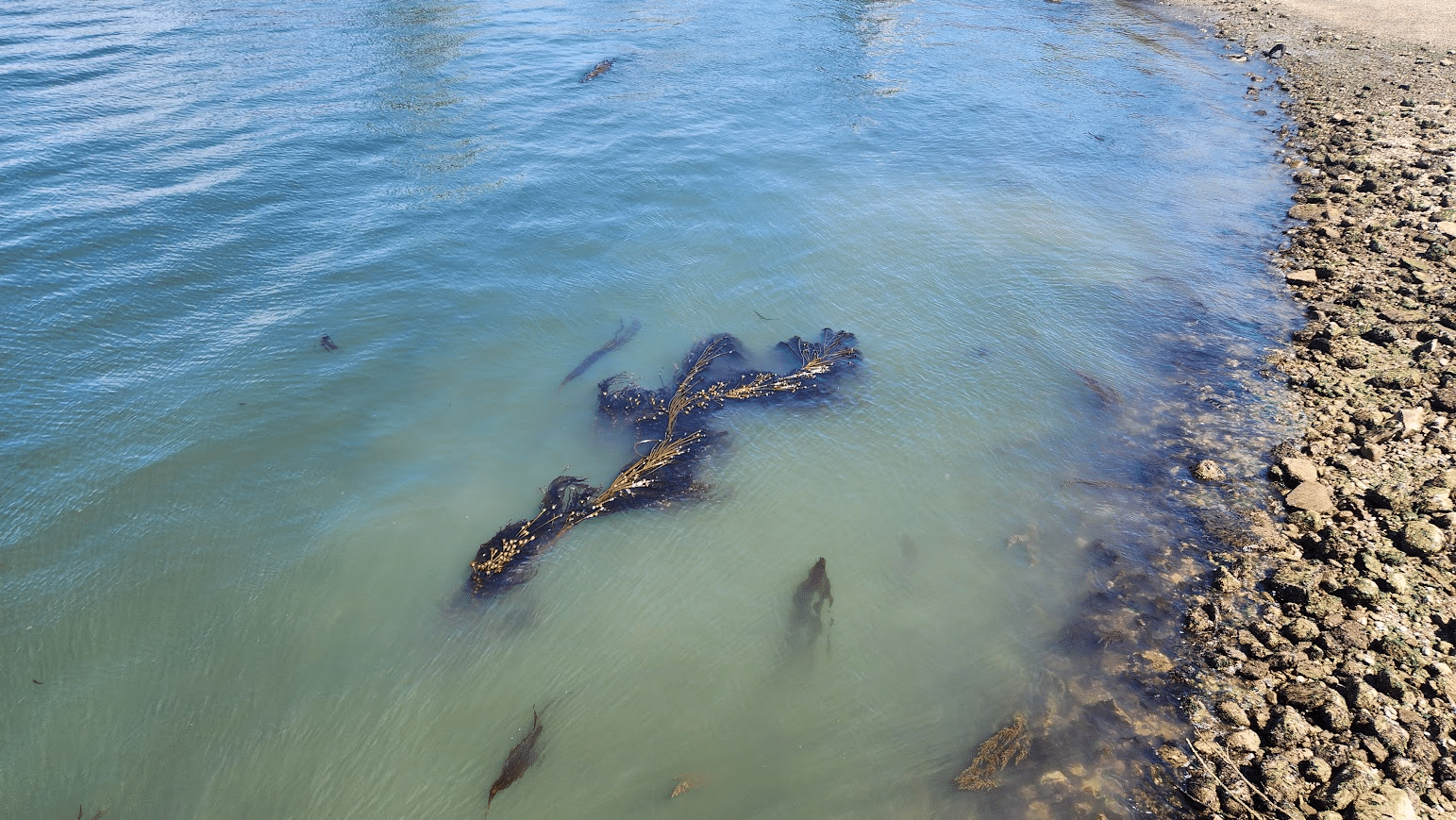
The first year of restoration trials in 2023 saw limited success; however, the lessons learned were used to refine the restoration sites and approaches. In 2024, the restoration trials were successful at both sites and clay tiles bolted to concrete blocks was the most successful method. Notably, bull kelp at both sites reached the surface, produced reproductive tissue, and persisted through the summer, creating canopy-forming habitat that was utilized by fish and invertebrates such as shiner and pile perch, Dungeness and Red rock crab, and ochre and leather sea stars (see bottom right photo and video).
These results are a first step toward reestablishing self-sustaining bull kelp populations at sites that have experienced decline. This TLR-led restoration project hopes these efforts can supply the tools, knowledge, and stakeholder engagement needed to accelerate the conservation and restoration of bull kelp forests in Burrard Inlet waters to support climate-ecosystem co-benefits.
To learn more about bull kelp forests, visit The Mysterious World of Bull Kelp by Josie Iselin and Marianna Leuschel.
For more information about TLR’s kelp restoration and stewardship efforts, please contact Camryn Good, Environmental Specialist – Land, Water, and Environment, at camryngood@twnation.ca.