A new technical report finds that salmon rely on a diverse network of habitats across xʔəl̓ilwətaʔɬ (the Indian River Watershed), with different habitat types providing important functions at different stages of their life cycle.
Off-channel wetlands and floodplain habitats were identified as productive rearing areas for juvenile coho salmon, while cooler groundwater-fed side channels provide important spawning habitat and stable thermal conditions that support adult chum salmon and other life stages. Together, these habitats contribute to a resilient watershed capable of supporting salmon throughout their lives.
Prepared by the səlilwətaɬ TLR Department, with support from our close partners at Fisheries and Oceans Canada (DFO), the report represents the culmination of several years of field-based monitoring and habitat assessment aimed at improving our understanding of salmon habitat and supporting long-term stewardship of the watershed.
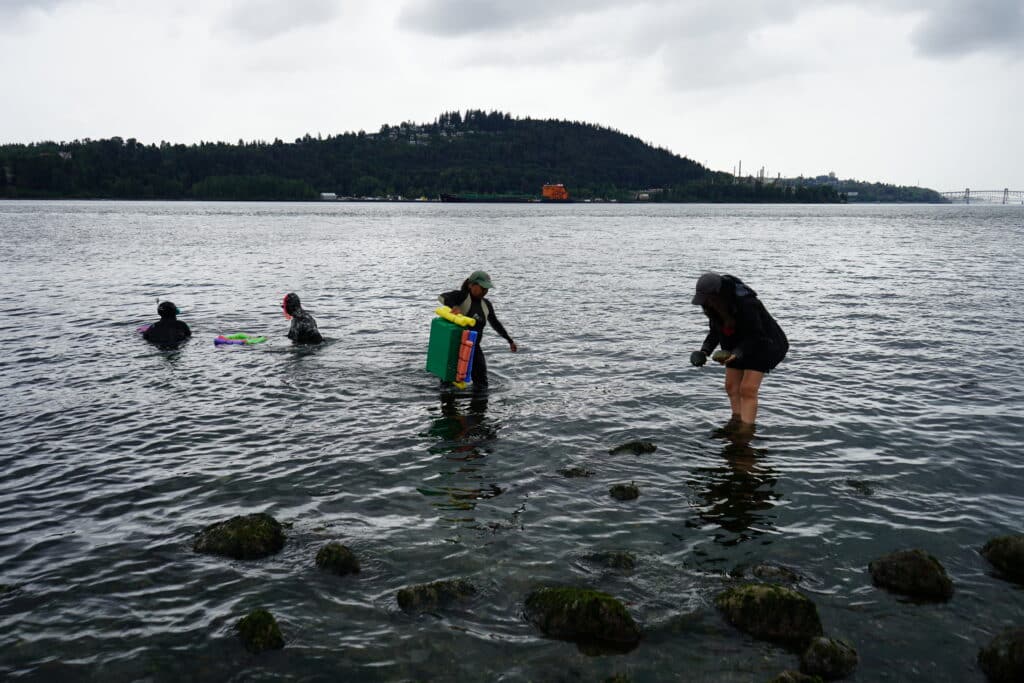
Over the past several years, the TLR Field Crew collected habitat, juvenile salmon, streamflow, and water temperature data throughout the watershed. Their work has helped build one of the most comprehensive datasets collected in xʔəl̓ilwətaʔɬ, providing valuable insight into how salmon use different habitats throughout the year.
The report brings together habitat assessments, minnow trapping, streamflow measurements, and continuous water temperature monitoring to better understand the conditions that support healthy salmon populations.
In addition to revealing that salmon rely on a diverse network of habitats over their lifetime, the report identifies opportunities for future stewardship and restoration. Recommendations include expanding habitat monitoring, restoring large woody debris and pool habitat where appropriate, continuing long-term water temperature monitoring, and investigating groundwater-fed spawning habitats to better understand egg survival and habitat quality.
This work supports the goals and objectives of the Indian River Watershed Integrated Stewardship Plan (IRWISP) and reflects Tsleil-Waututh Nation’s ongoing commitment to caring for xʔəl̓ilwətaʔɬ through Indigenous stewardship and science-based management. By improving our understanding of how different habitats contribute to healthy salmon populations, these findings will help guide future restoration, monitoring, and stewardship efforts throughout the watershed.
A special thank you goes to the TLR Field Crew, whose dedication and endless hours in the field made this work possible. From installing temperature loggers and conducting habitat surveys to minnow trapping, streamflow measurements, and data collection, their efforts formed the foundation of this work.
We invite you to read the full report to learn more about the findings and how they will help guide future stewardship of xʔəl̓ilwətaʔɬ.