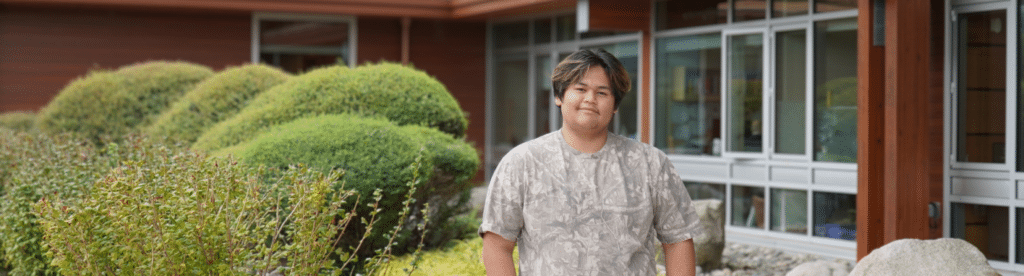
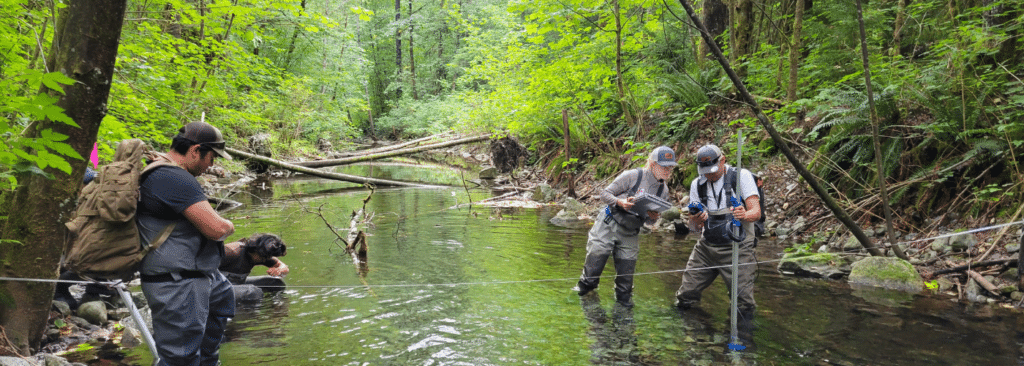
After moving away from the Tsleil-Waututh Nation reserve in 2024, Jeffrey Hernandez was looking for an opportunity to reconnect with the lands and waters of his traditional territory through boots-on-the-ground stewardship work.
This summer, as a Youth Intern with our Treaty, Lands, and Resources Department, Jeffrey gained valuable experience in environmental stewardship, learning about risk mitigation and ecosystem protection.
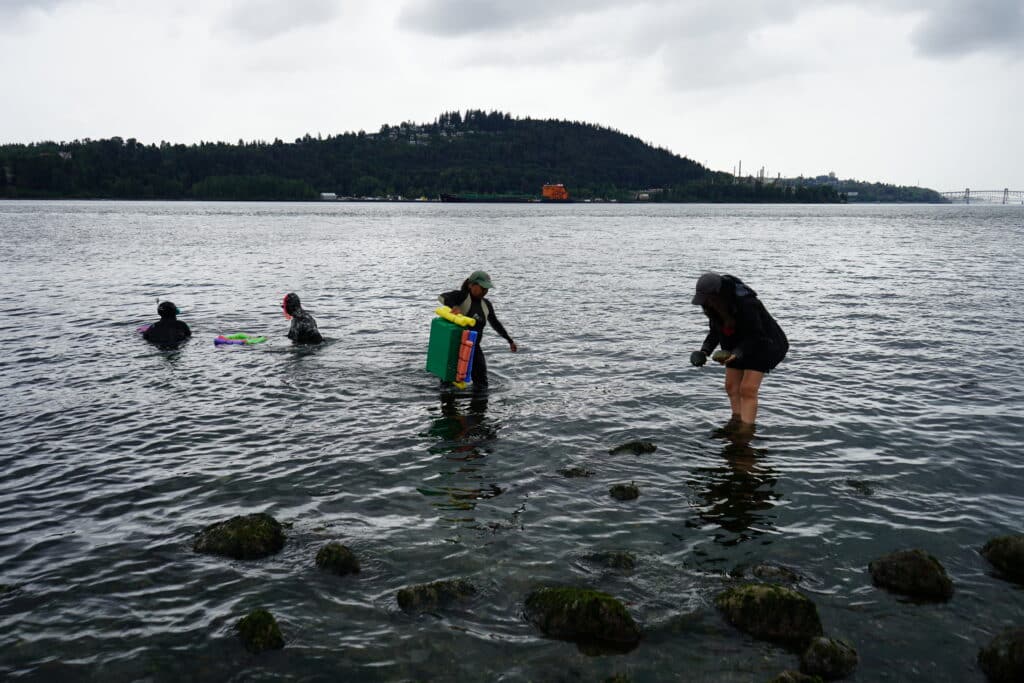
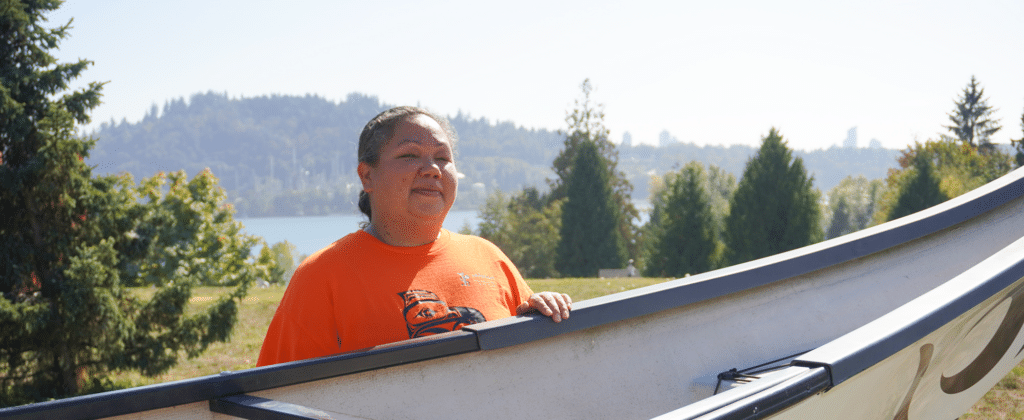
From documenting traditional canoe routes to mapping shoreline harvesting areas with community members, the youth internship offered a unique perspective on the connection between land, culture, and conservation.
Why did you want to work with TWN this summer?
When I applied for this internship, I was excited by the prospect of fieldwork within our traditional lands. Since moving off reserve in 2024, I’ve been looking for a chance to get to know our territory better through boots-on-the-ground stewardship, and the Youth Internship perfectly fit the bill. Before this internship, I was vaguely aware of the work TLR had put into the clam garden, shoreline restoration efforts, etc., so I assumed reviving the environment was the scope of work. However, as things shook out, my rotation put me with teams who mostly worked within the Administration office.
What has your experience been like?
At first, of course, I was a bit disheartened, thinking I’d spend this summer cooped up in dark boardrooms, but after my first week, I appreciated TLR’s wide range of work, which includes everything from recommending mitigation actions for environmental damage caused by large infrastructure projects to documenting traditional canoe and shoreline harvesting routes with community members. I’ve come to realize the variety of work TLR handles.
What have you learnt from your internship so far?

Some of the most interesting work I’ve had the opportunity to contribute tohas been with Ginevra Toniello and the Archaeology team. Recently, I was asked to read Angela George’s 2020 SFU Governance Weaving capstone paper and pull information for an infographic to be placed in the Gathering Place. I found myself consistently surprised by how much meaning and intentionality fit into her 10’ x 6’ weaving. No motif was incorporated by chance.
For example, one section featured 11 consecutive red diagonal parallelograms struck through with a black-and-white striped line, depicting 11 canoe paddlers pulling a canoe, with a reflection of 11 Ancestor paddlers pulling alongside. I appreciate how Angela’s weaving passes teachings forward and looks toward the seven generations ahead of TWN.
How does working at TWN differ from your other work experiences?
Compared to my other work experiences, even those with TWN, I’ve encountered much more camaraderie and collaboration. Maybe this is because my last stint with TWN was during the early days of the COVID-19 pandemic. That said, much of the good feeling I have comes from having so many valuable knowledge holders in the office to consult when I need support or even to go for lunch with when I am curious about more.
How does this experience at TWN relate to your hopes and dreams?
As I enter my second year in the Faculty of Arts and Social Sciences at Simon Fraser University (SFU) this fall, I hope to deepen my knowledge of Indigeneity and ecological conservation so that I, too, can contribute to TWN’s assertions of nationhood in the years to come.