September 30, 2026

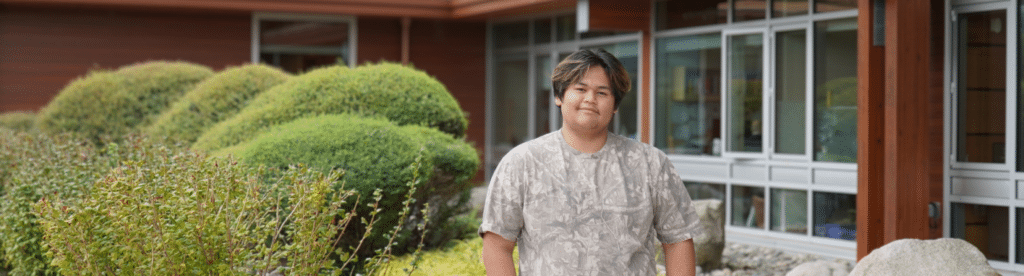
Photo credit: Andy Prest for North Shore News
When thinking about the National Day for Truth and Reconciliation (Orange Shirt Day), I think of trauma and loss. On my mother’s side, my family experienced Residential School and the Sixties Scoop. To this day, not all my family has met each other. My mother and siblings were separated through school and foster care, a consequence of Residential School.
My grandmother went to Residential School. My father didn’t attend but because of how close his public school was from the Residential School, the behaviours there were similar. They fought every day for their safety, for their family, and for other Indigenous kids in school, against not only other students, but teachers too.
My grandma did a really good job of making Residential School a place she could live and learn. But she was removed away from home – she was born in the Fraser Valley and put in Penelakut Island (formerly Kuper Island). The distance from home to the island was huge, and like most kids moved far away from home, there wasn’t a chance to go home sometimes.
Considering these family members influenced my life and how I grew up, a lot of the impacts of Residential School stayed with us – they were brought home.
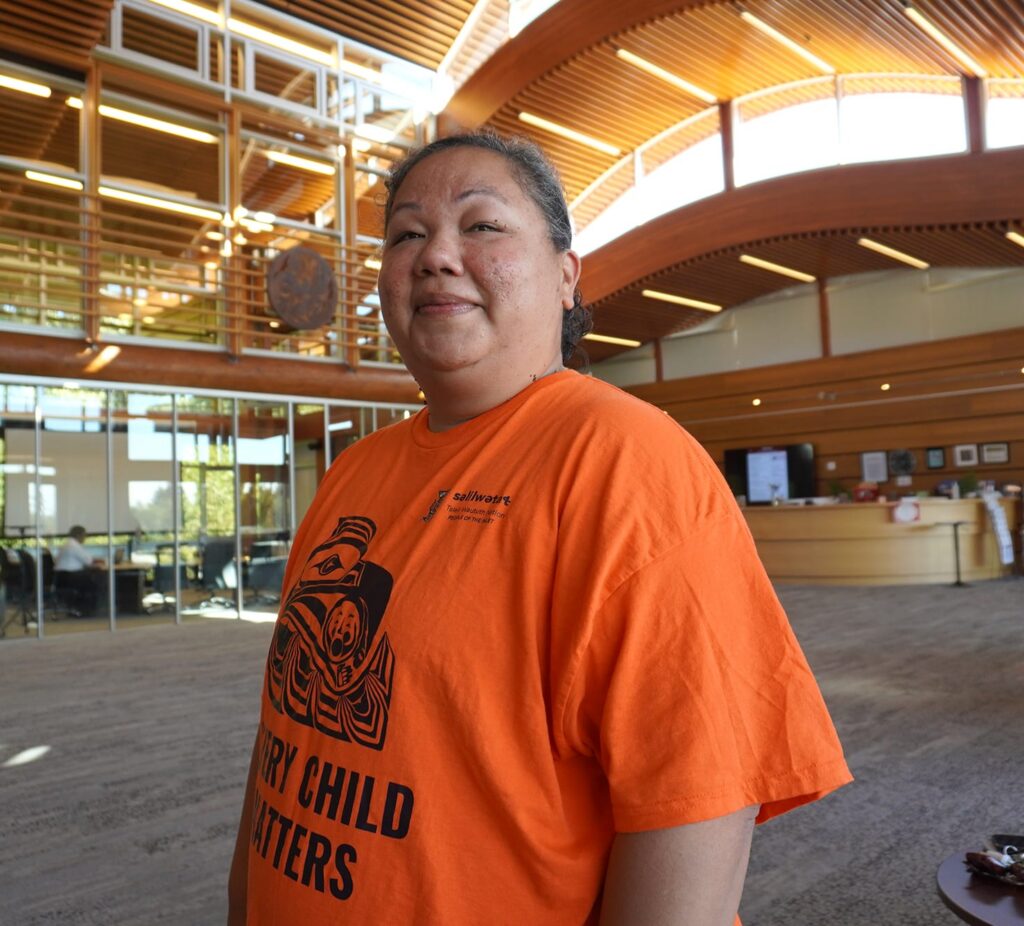
As much as family tried to change, the impacts of Residential School were embedded in their everyday life. My mother became heavily addicted to drugs and alcohol. Learning to navigate drugs and alcohol at a young age, or any age, is very complicated. Everyone is just trying to survive through the traumatic experiences that they lived.
Various traditional practices, such as drumming and singing, were a challenge themselves because the Residential School system tried to erase our culture. Since we lived so close to the city as Tsleil-Waututh People, Indian Agents were always just down the road. Back then, gathering in a group larger than your family was considered illegal.
Our kids wonder why our grandparents don’t teach us hən̓q̓əmin̓əm̓ language; it’s because their language and culture was beaten out of them. When you’re scared your children will face the same consequences, it’s not easy to bring forward culture and language into their lives. It’s the same for food, for family relations, our ways of life. Everything we were taught was removed by the Residential School process. Living through 150 years of that, and then trying to make changes in the past 40 years, has been a challenge.
Today, səlilwətaɬ (Tsleil-Waututh Nation) runs programs led by staff who help Members through their journey, which is an ongoing process. The apology from Canada really brought it to the forefront – Canada admitting what they did and its impacts on Indigenous people.
Our Residential School Survivors Committee has been working on programming such as cultural practices and healing in spaces like gardens where we share history and knowledge of what happened, tying in traditional medicines. This allows our People, in their own way, to have a chance to heal and share and learn from one another. Everyone is in different stages of their healing journey; Residential Schools affected everyone in different ways.
In previous years, our Nation led a pilgrimage to the former site of the local Residential School and then from the school back to our community. A lot of our kids today learned how far our grandparents had to walk to reach that school – and how they had to walk through the river as there were no bridges back then – and how different it is or them today.
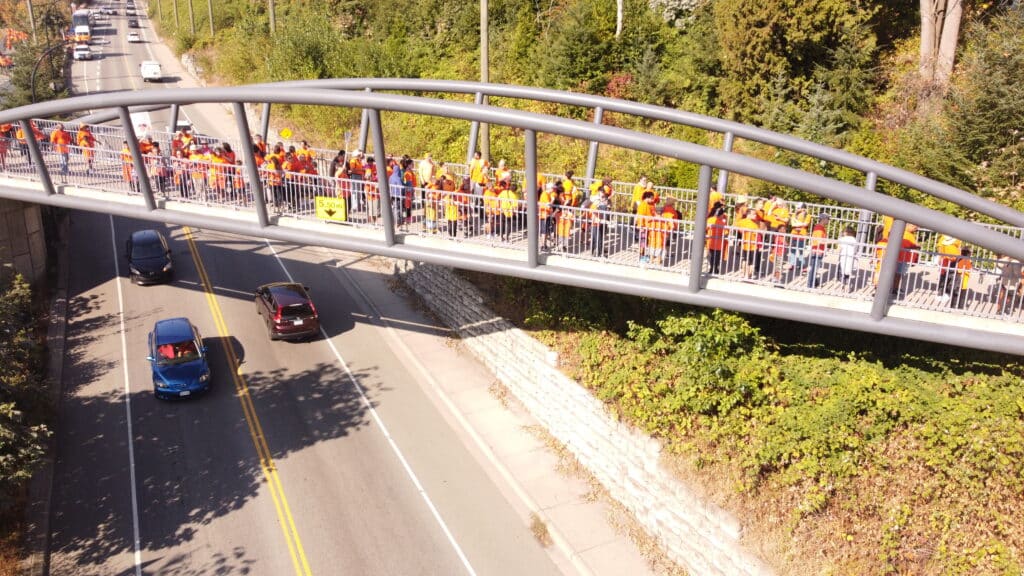
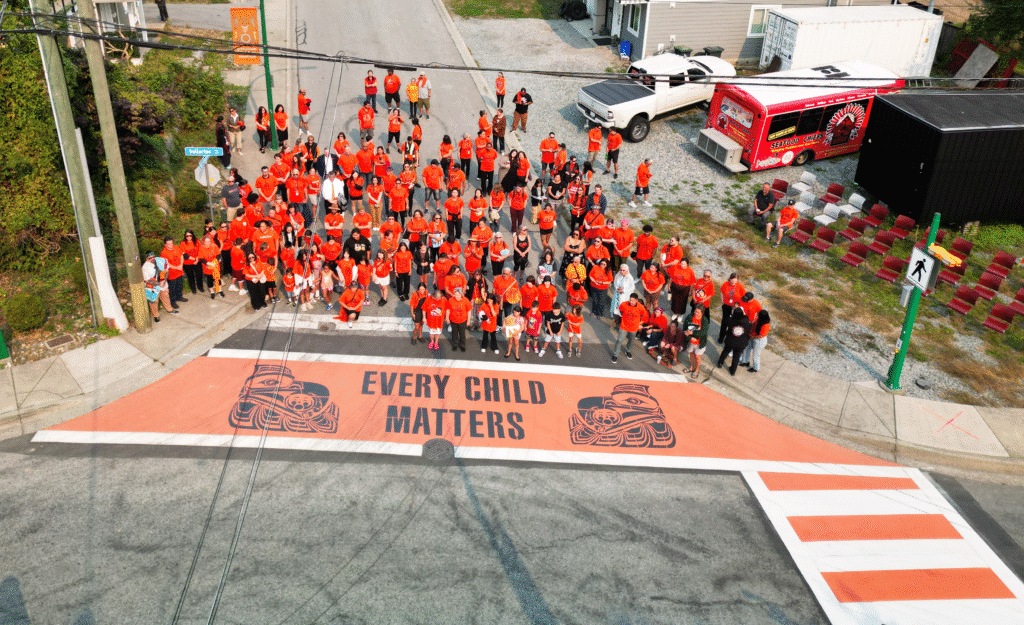
This year, we’re celebrating each other’s company on Orange Shirt Day. Sharing food, gathering together, and drumming and singing weren’t allowed during the duration of Residential School, so this is what we’re doing to support our People’s healing journey.
I think it’s important for the broader public to be informed of colonialism and Residential Schools and Day Schools and their impacts. As much as some people say it is in the history books, the impacts are still with us today. The last school closed in my lifetime. Take a deep dive in a book on the topic, walk through a museum exhibit, or speak with different groups about it. Becoming educated, being open minded when working with Indigenous peoples, and expressing empathy go a long way. Look at the 94 Calls to Action with Truth and Reconciliation Commission of Canada and see which calls you can do yourself. Remain mindful that Indigenous people are working through their own trauma as well. Some days, we need to do our own ceremony, have our own reflections, and have our own spaces to heal.
This ties into the next seven generations: educating our Tsleil-Waututh People on what happened, how it happened, and how our community is choosing to do things differently. Strengthening our language, culture, and family connections can help our people succeed. Our TWN Community Society supports our Members with grants to equip them with the proper tools. The Mental Wellness team provides counselling and many Members visit our health clinic to seek help – during Residential School, many people didn’t trust doctors to take care of them. Having doctors and nurses in our community is a huge step forward to taking care of ourselves wholistically.
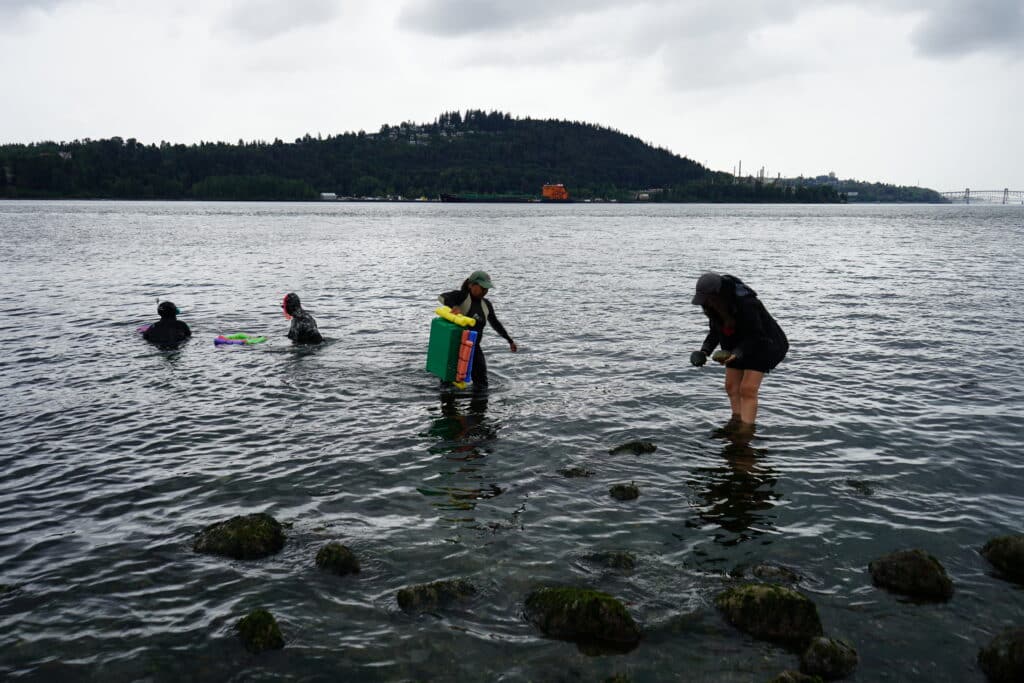
Being on the land and waters, enjoying traditional activities, and being a part of multigenerational visits to our former village sites are all ways of healing. Our community is enjoying listening to our Elders share what the beaches once looked like, the resurgence of canoe culture, and drumming and singing our traditional songs. I love how our kids are picking up the paddle or a drum and choosing a healthier way of being. Restoring culture and language involves medicinal healing, traditional practices of being on the land, and understanding how our Ancestors walked with the animals and plants, moved with the seasons, and took care of themselves and one another.