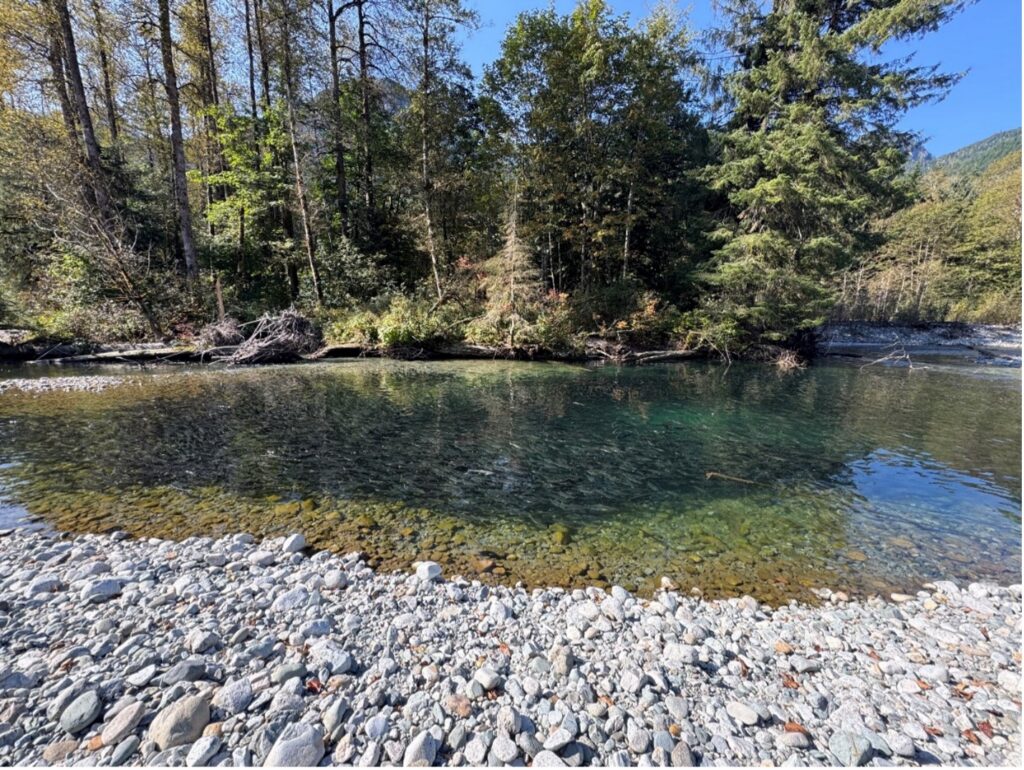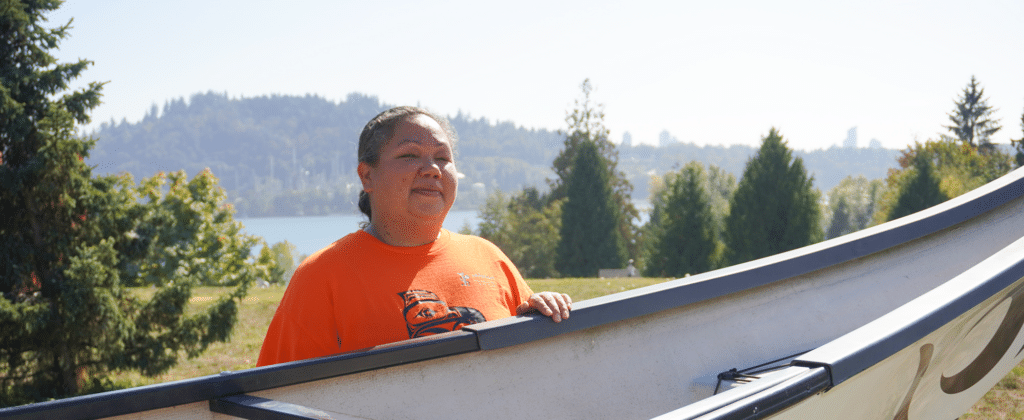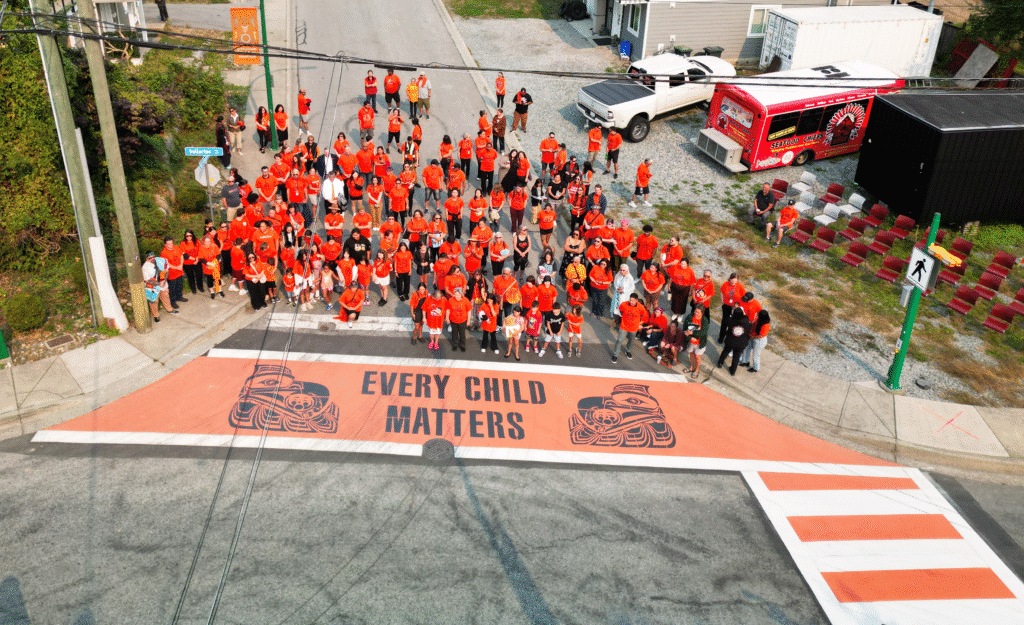
Every year, the summer comes with excitement for a busy field season. The days are longer, the plants are lush and full of life, and our animal friends are returning to show off their growing families. Each year we welcome back the salmon to our waters and on odd numbered years, we welcome our run of pink salmon back to xʔəl̓ilwətaʔɬ (Indian River Watershed).
Starting in June of this year, the Field Crew of Natural Resource Technicians (‘the Crew’) started seeing the returning population jumping through the waters of Burrard Inlet and Indian Arm, making their way to spawn in their natal river. By July, the pink salmon were entering the Indian River in the thousands, and the Crew started their fish counts.
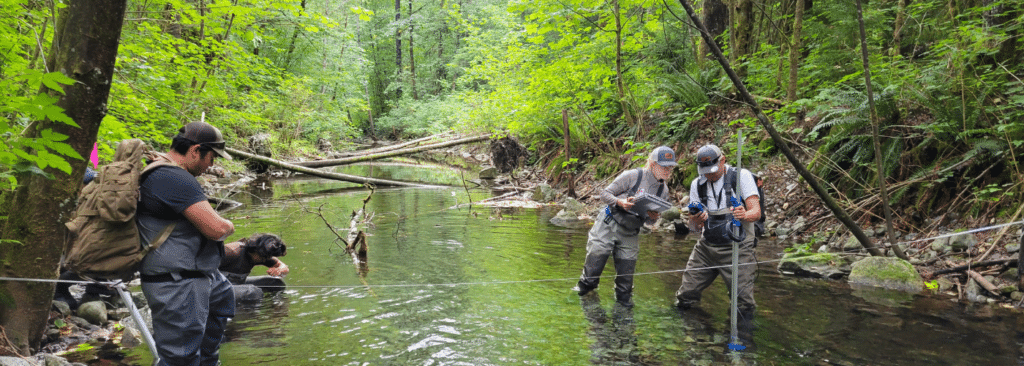
Fish counts consist of the Crew walking the mainstem and side channels of the Indian River and making observations and estimations of the number of fish and their species in each section. Over the years, the Crew have gained a great amount of expertise in making precise observations of the number of salmon and their species that they see. Collectively the Crew has almost 50 years of experience in our fisheries up the Indian River Watershed.
This year, the Crew has observed the return of a healthy pink salmon run in the river, as seen in some of the other river systems in southern BC. The bears and wolves have had a feast on the salmon, with the Crew noticing the wolves preferred the head (brain, cheek and eyes) and the bears ate the fatty belly.

Pink Salmon eaten by a Wolf
In the late summer, the pink salmon run was facing some challenges when the weather remained dry and sunny for an extended period, creating drought conditions on the mainstem of the Indian River. Trying to be as proactive as possible, we worked closely with our partners at DFO in the Restoration Unit and with Fortis BC for machine access, to determine a drought plan for a section of the river with low water levels. The Crew and DFO staff spent 2 weeks conducting site visits and with the support of Fortis BC, placed aerators in deeper sections where the fish were holding and oxygen levels were being depleted. Thankfully, the change of season from summer to fall came, and we received the rain we needed to avoid any major works in the river this year. The pink run was able to make their way up and continue spawning in the mainstem of the river.
The Crew’s fishery work will continue until the new year, with chum starting to make their way up right now followed by the coho in the coming months.
Keep an eye out for more Crew updates!