Congratulations to səlilwətaɬ Member artist Gordon Dick for having his artwork featured in a Spotlight Series titled “Currents of Reconciliation: Honoring Legacy, Healing and Hope” at the Museum of North Vancouver (MONOVA). Gordon’s artwork will be on display until December 2026. Please stop by to explore it up close!
“Currents of Reconciliation: Honoring Legacy, Healing and Hope” features a selection of works by Gordon Dick as well as Lorraine Fenkner (on display until Aug 2027). This Spotlight Series explores themes of identity, resilience, healing, and the enduring strength of Indigenous cultures.
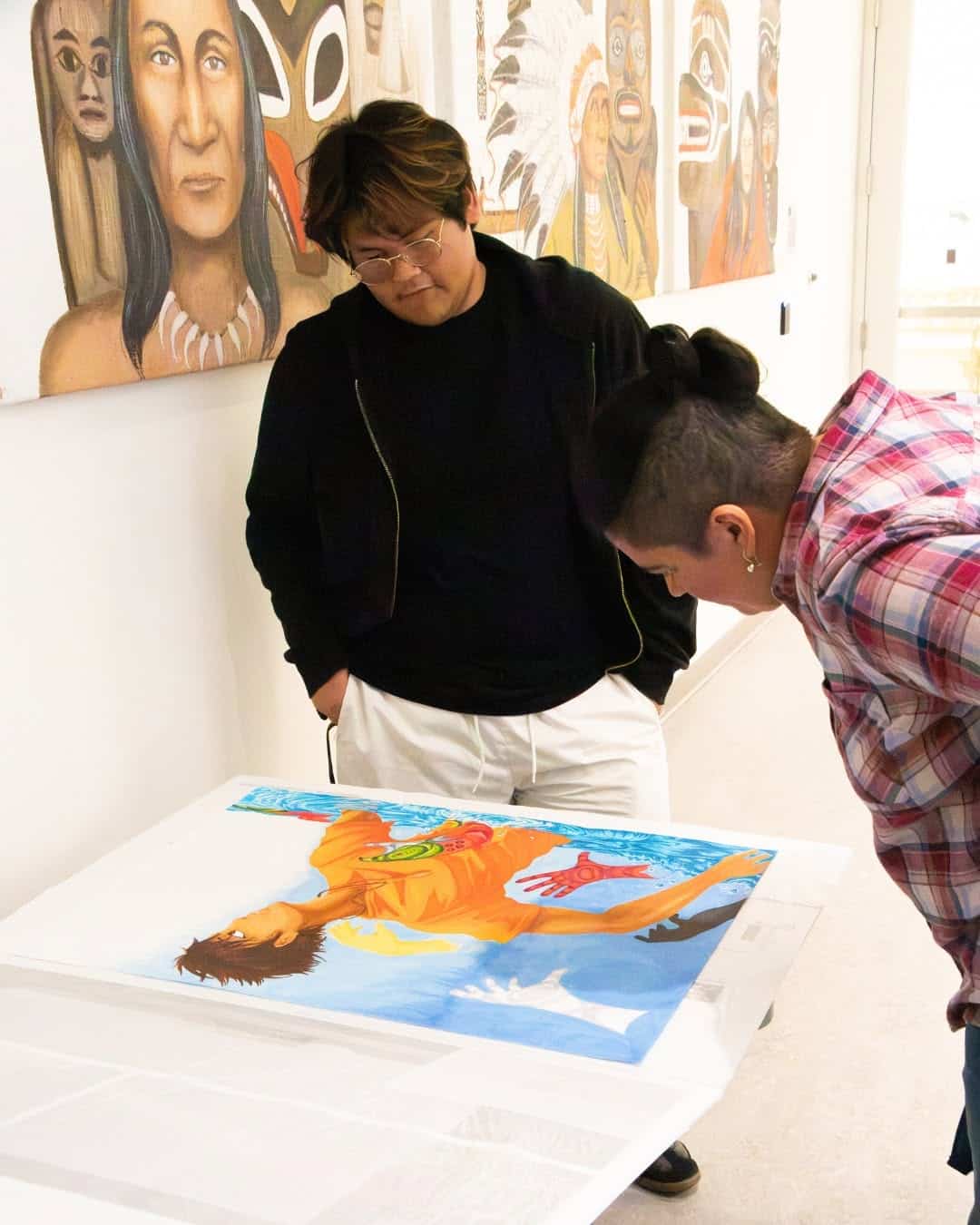
Gordon Kris Dick is a səlilwətaɬ (Tsleil-Waututh) mixed-media artist, centering his craft around themes of healing, resilience, connection, and hope. Presented in collaboration with the səlilwətaɬ (Tsleil-Waututh) Nation, Dick’s selected work blends Japanese anime-style art with Coast Salish influences to connote balance, community, and the guidance of ancestors. A rising artist within the community, Dick has presented work for the United Nations Association, the City of Vancouver’s ‘Launch Pad’ Public Art Program, and Simon Fraser University’s Museum of Archaeology and Ethnology.
Carried by the Currents of Life tells a story of healing, growth, connection, resilience, and hope.
The Medicine Wheel hands represent balance across the emotional, mental, physical, and spiritual dimensions, while honoring the guidance and strength of our ancestors. The paddle necklace symbolizes relationships, teamwork, and the support we gain from family and community. Water represents life’s journey and the lessons it brings, while the salmon reflects determination and resilience through challenges. The transition from darkness to light represents moving through hardship toward healing, hope, and a brighter future. Together, these elements remind us to honour where we come from, stay connected, learn and heal along the way, and continue moving forward.
Lorraine Fenkner (1931 – 2007) was a close friend and Personal Assistant to səlilwətaɬ (Tsleil-Waututh) Chief Dan George (1899 – 1981). She was a Canadian artist who developed a close friendship with Chief Dan George while working as his Personal Assistant during filming of Little Big Man and The Outlaw Josey Wales in the 1970s. Inspired by this relationship, she created a series of portraits that capture both the public figure and the person she came to know. These paintings, together with other donated materials by Lorraine’s daughter Carol (available at the Archives of North Vancouver), offer a unique glimpse into the life and legacy of a leader whose voice continues to inspire conversations about Indigenous rights, cultural resilience, and reconciliation.
The works on display here showcase (in order):
- Will Sampson (1933 – 1987) Actor from Muscogee (Creek Nation), Oklahoma
- Chief Dan George (1899 – 1981) Actor and Activist from səlilwətaɬ (Tsleil-Waututh Nation), North Vancouver
- Geraldine Keams (1951 – Present) Actress from the Navajo Nation, Arizona

Created using oil on burlap, Fenkner’s work honours a respected leader, actor, poet, and advocate for Indigenous rights. Chief Dan George voice helped bring national attention to Indigenous experiences, and his Lament for Confederation (1967) remains an important touchstone in conversations about Truth and Reconciliation.
Fenker’s collection was generously donated to MONOVA by her daughter, Carol, in 2026.
Together, these works create conversation across generations. Chief Dan George’s legacy reminds us of the importance of listening to Indigenous voices, acknowledging historical truths, and fostering mutual understanding. Gordon Kris Dick’s work offers a vision of healing and collective strength rooted in cultural teachings and community relationships.
As the currents of life carry us forward, we invite visitors to reflect on the interconnectedness of past, present, and future, and encourage discussion about where we come from, to learn from our shared histories, and continue the ongoing journey toward reconciliation, respect, and hope.