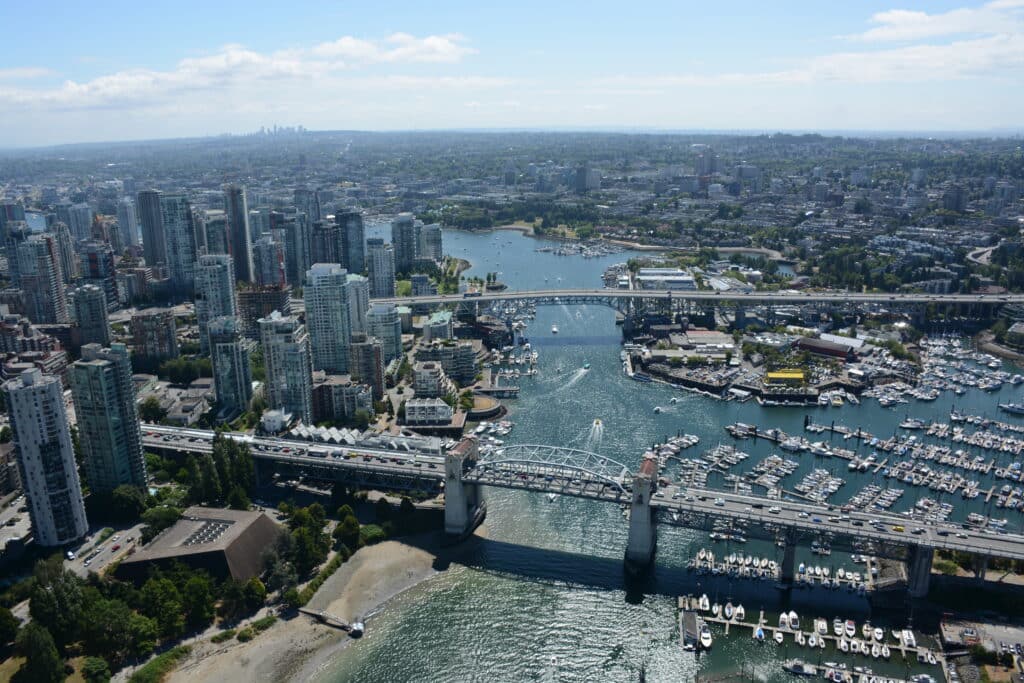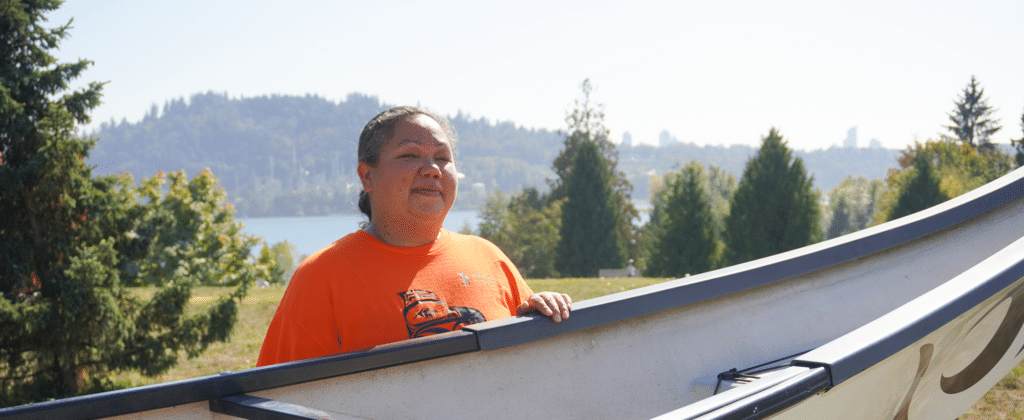
On June 17, there was a beautiful celebration in this city that is home to Musqueam, Tsleil-Waututh and Squamish people, explains Gabriel George, Director of Treaty Lands and Resources. In the colonisation of these lands we were erased, and today some of the erasure was undone. Our collective Nations came together and put a name on this beautiful park.
The names are: sθәqәlxenәm in the hən̓q̓əmin̓əm̓ language and ts’exwts’áxwi7 in the Sḵwx̱wú7mesh language.
The names mean the same thing, they mean rainbow. It connects back to what this place once was. It was a rainforest with giant cedar trees. When the storms clear and the clouds part, sometimes what we see is a rainbow which gives us that feeling of goodness.
We hope that when people come here and look up to the beautiful art done by our artists, they have a good feeling and find a little bit of peace.
This is the first park in Vancouver to be gifted a name in both the hən̓q̓əmin̓əm̓ and Sḵwx̱wú7mesh languages.
sθәqәlxenәm ts’exwts’áxwi7, meaning ‘rainbow’, was chosen by the Nations because the land where the park now sits was once forested with large trees and had many sources of water, including a marsh where the sun and mist would form rainbows.
The name also reflects the bridging of the diverse people and communities the park brings together, and is a nod to the vibrant LGBTQIA2S+ history of the area.
The park is located in the downtown core at Smithe and Richards streets.
Chief Jen Thomas of Tsleil-Waututh Nation said: “We hope that sθәqәlxenәm ts’exwts’áxwi7, ‘rainbow’ park, is a place everyone feels comfortable gathering and coming together as a community. Tsleil-Waututh Nation is proud to work with the Squamish Nation and the Musqueam Indian Band to gift this name which helps put our face back on our traditional territory and have our presence known in this beautiful outdoor space.”