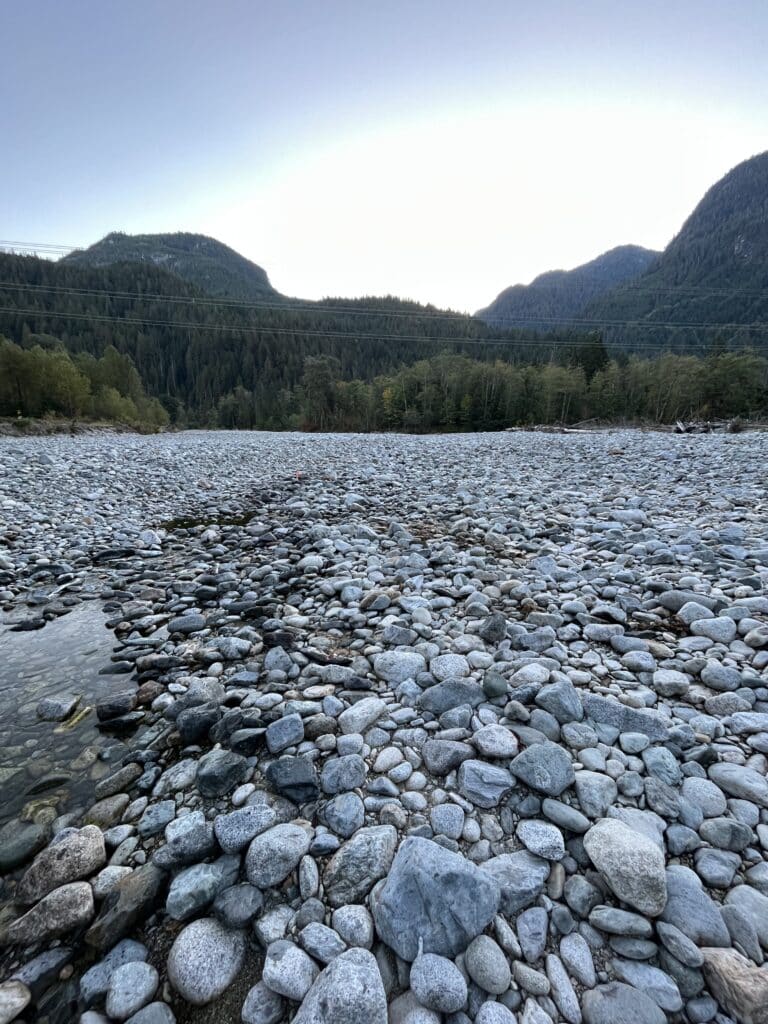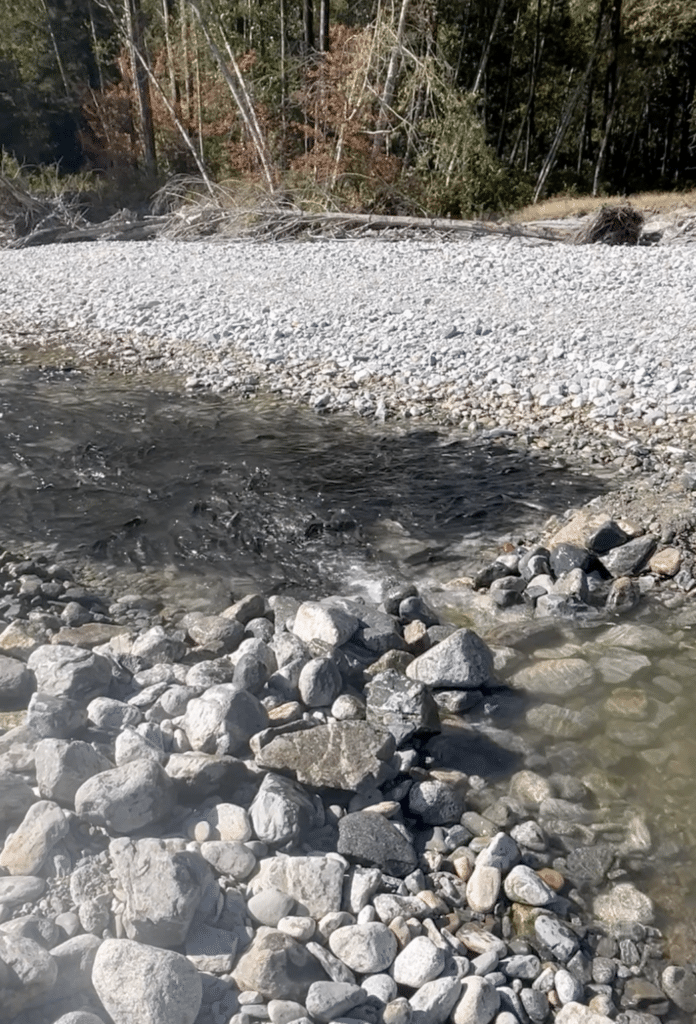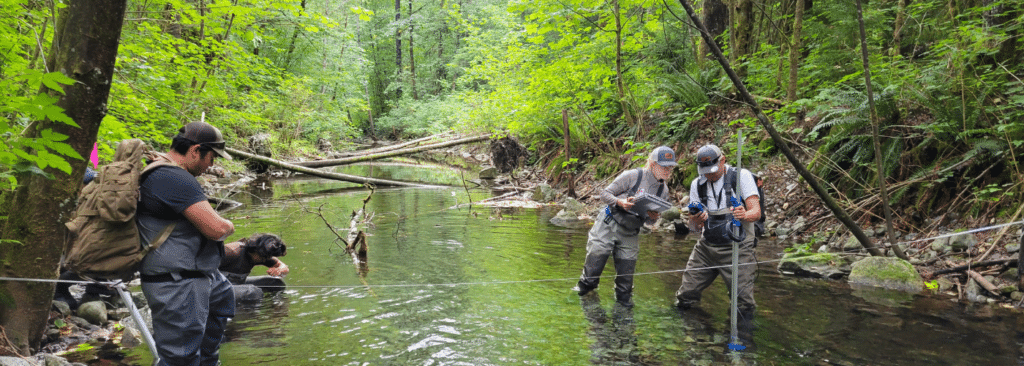
On September 14, 2023, Tsleil-Waututh Nation’s Treaty, Lands and Resources’ fisheries crew noticed that part of the Indian River had gone below surface due to low flow drought conditions. This was preventing spawning pink salmon from moving upstream to access the spawning habitat.
The fish began to pool up in large numbers. With so many fish and such little water, the dissolved oxygen levels were dropping fast, and dangerously low. The TLR Field Crew acted fast to save as many fish as possible, as more and more fish were going to be entering the river in the coming weeks. The chum salmon will also be arriving to spawn in October, so we need the pinks to get up river and complete their spawning, in order to make room for the upcoming chum.
TLR met with the Department of Fisheries and Oceans’ (DFO’s) restoration staff on September 15 to develop a plan to reconnect the mainstem to get more fish pushing up river, and allow freshwater to flow downstream. A site visit was initiated with TWN’s fisheries team, DFO’s engineers and biologists, and our contractor Big Dan.
We started the emergency work to save the trapped salmon. We worked for two days to dig a deep and long trench with an excavator through the disconnected gravel bar and were able to reconnect the mainstem river flows. It’s never easy or advisable to work with heavy machinery in a river when so many fish are actively spawning, but we were not going to sit back and watch a full scale climate disaster unfold. This work needed to be done in order to save tens of thousands of salmon.
This is the second year in a row that the river has gone subsurface (dried up in sections). The biggest difference from this year to last is that the river has dried up a full month earlier than last year, and we have nearly half a million salmon currently in the river. We are thrilled that this years pink run is quite large, but the on-going drought and low river levels are not working in our favour. Fingers crossed for rain!
We are thankful to have received funding for this urgent work through the Pacific Salmon Foundation.
hay čxʷ q̓ə
Thank you
Graham R. Nicholas
TLR Senior Environmental Specialist – Field Programs