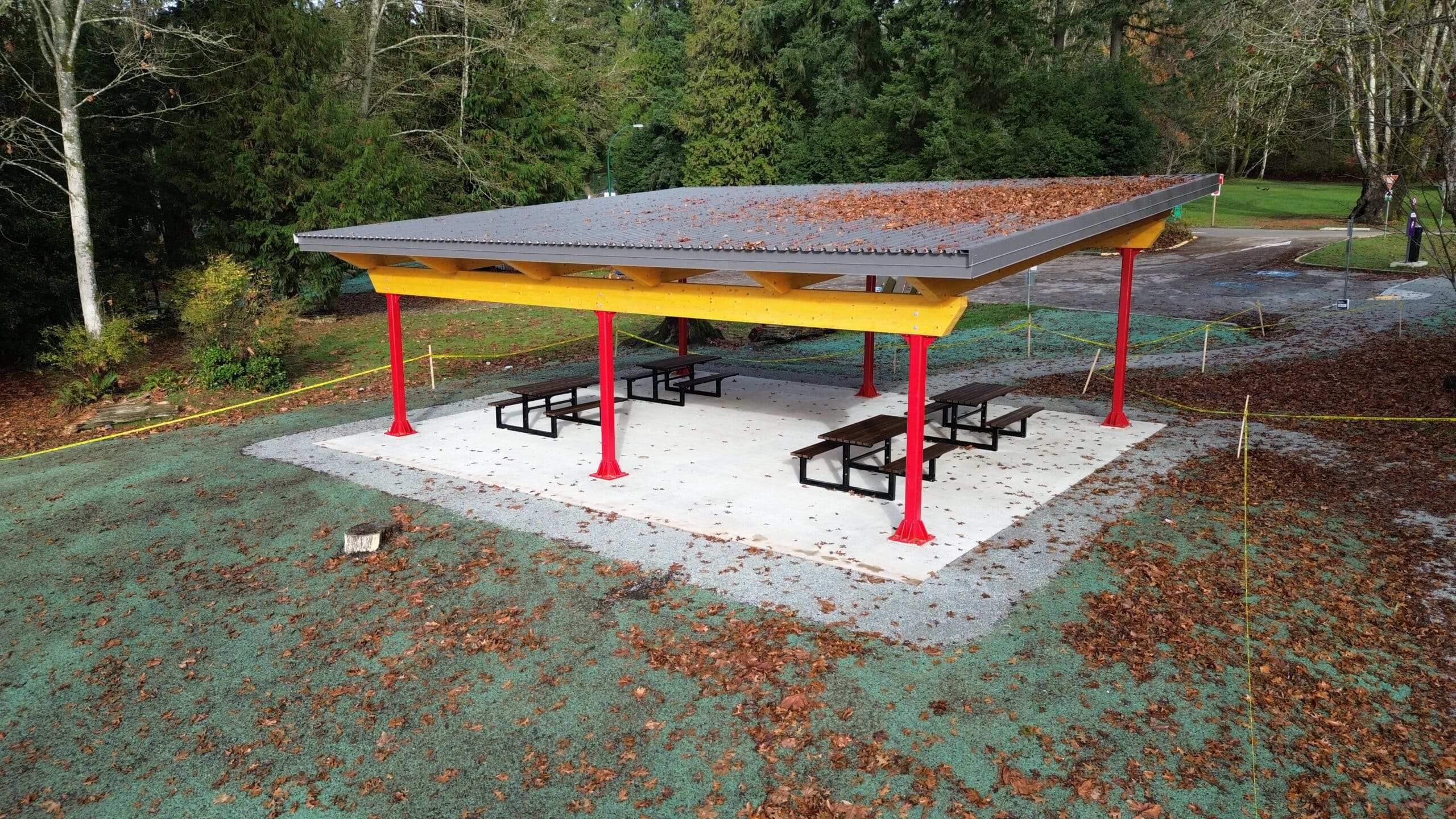
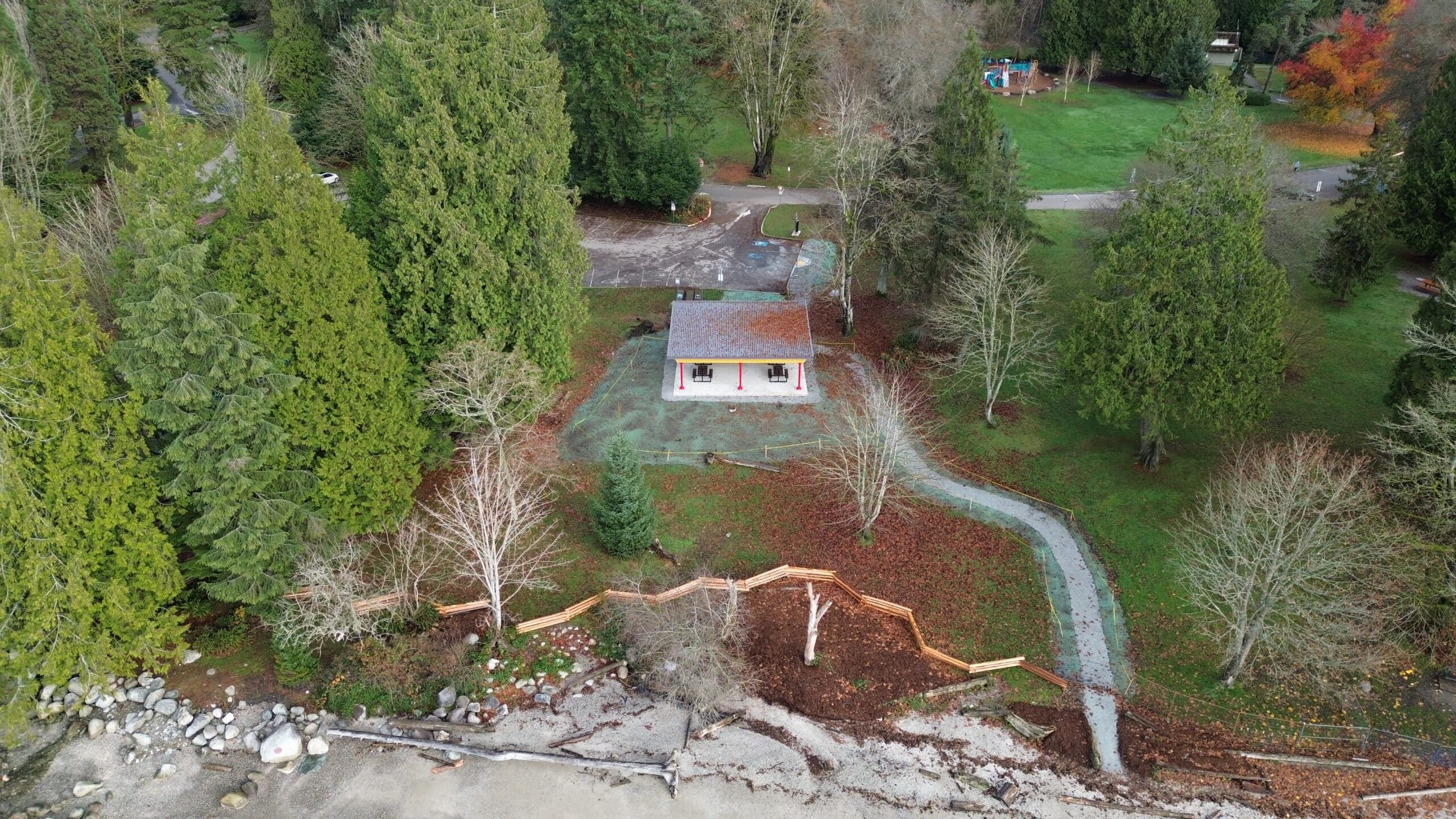
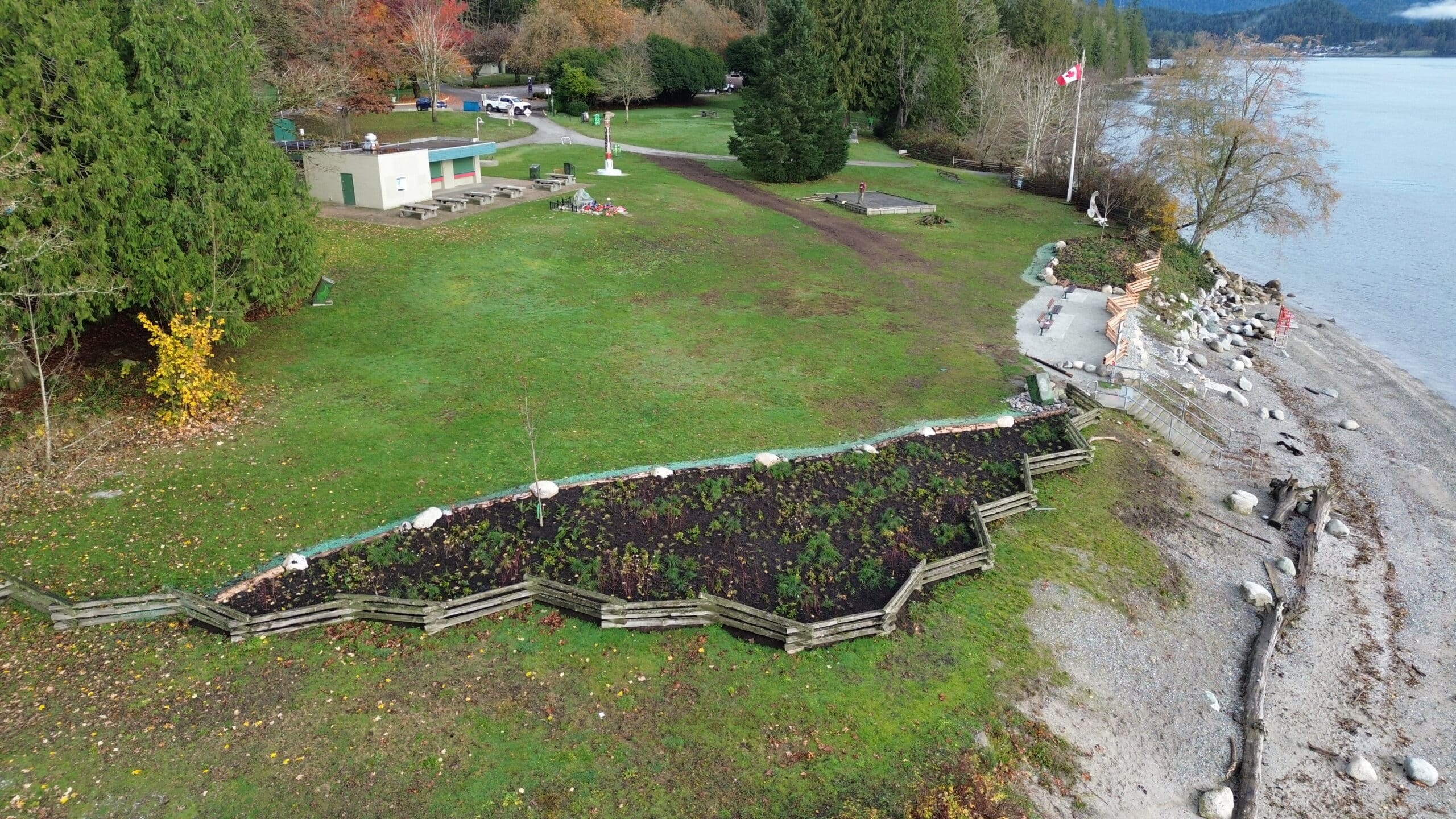
The səlilwətaɬ (Tsleil-Waututh Nation) Natural Resource Planning Team is pleased to announce that Phase 1 of the Whey-ah-Wichen Shoreline Restoration Project is complete! The second and final phase of the project, which will address erosion at Little Cates, will begin at the end of the summer.
Phase 1 of the project comprises the majority of the project’s work, beginning last year with upland improvements. This included:
- invasive plant removal and additional fencing along the shore;
- a new picnic shelter and path to the beach;
- native plantings and new benches at Roche Point;
- repaving of the path below the paddling centre; and,
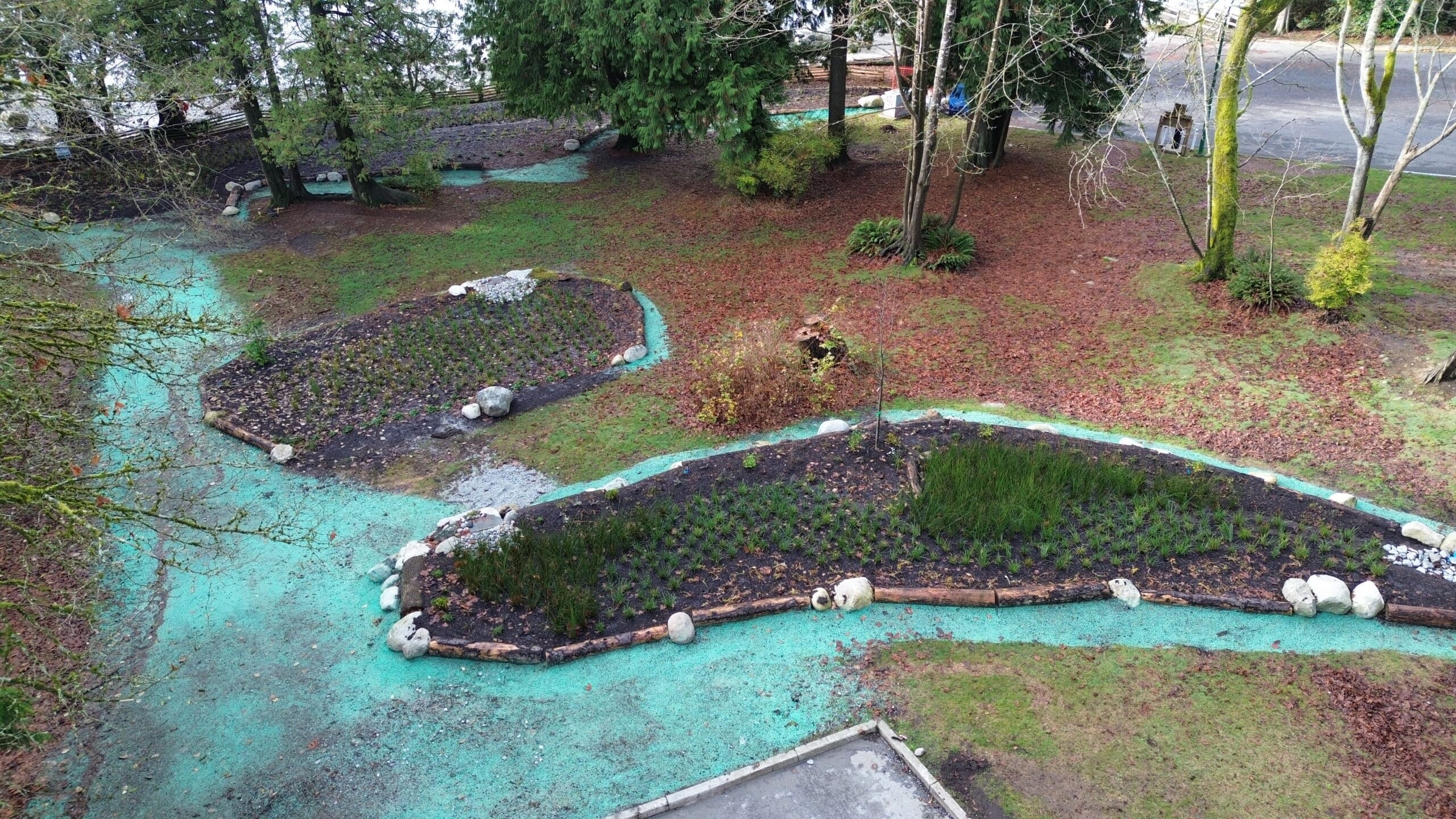
- the construction of three rain gardens adjacent to the boat launch to capture contaminated runoff.
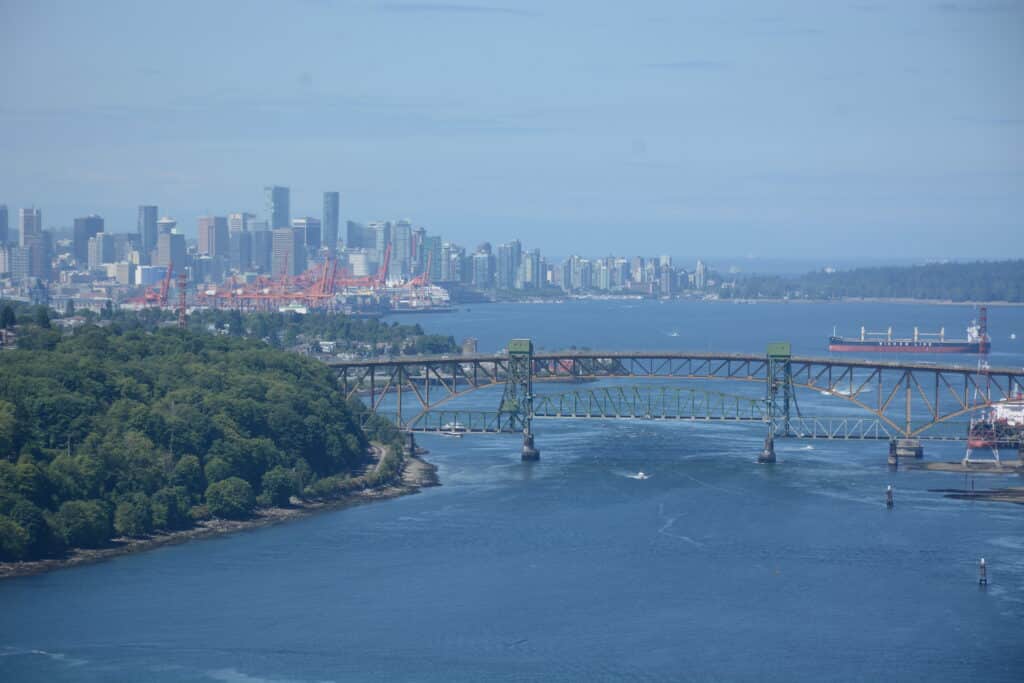
Together, these elements aim to improve visitor experience and access to the beach, enhance the shoreline ecosystem, and protect cultural heritage and the waters of səlilwət (Burrard Inlet).
The foreshore component of Phase 1 was completed between the end of fall 2025 and the beginning of 2026. Large quantities of boulders, sand, and gravel were carefully delivered to the beach via barge in locations which avoided impacts to eel grass beds. Most of the material was imported from a quarry on Vancouver Island. However, thanks to our Agreement on Collaborative Decision Making with Environment and Climate Change Canada, we were able to repurpose dredged materials from the Inlet, which would have otherwise been destined for the bottom of the Salish Sea.
Our Nation’s Treaty, Lands, and Resources Department has long been working towards the beneficial reuse of dredged materials from the Inlet. While the repurposed materials only made up a small part of what was used for Phase 1, it represents a groundbreaking achievement for səlilwətaɬ.
The foreshore work for Phase 1 saw the nourishment of East Beach, Roche Point, Central Beach, and West Beach. Over a meter of sand and gravel was added to many sections of these beaches. In some places, small boulder headlands were built to dissipate waves and retain sediment.
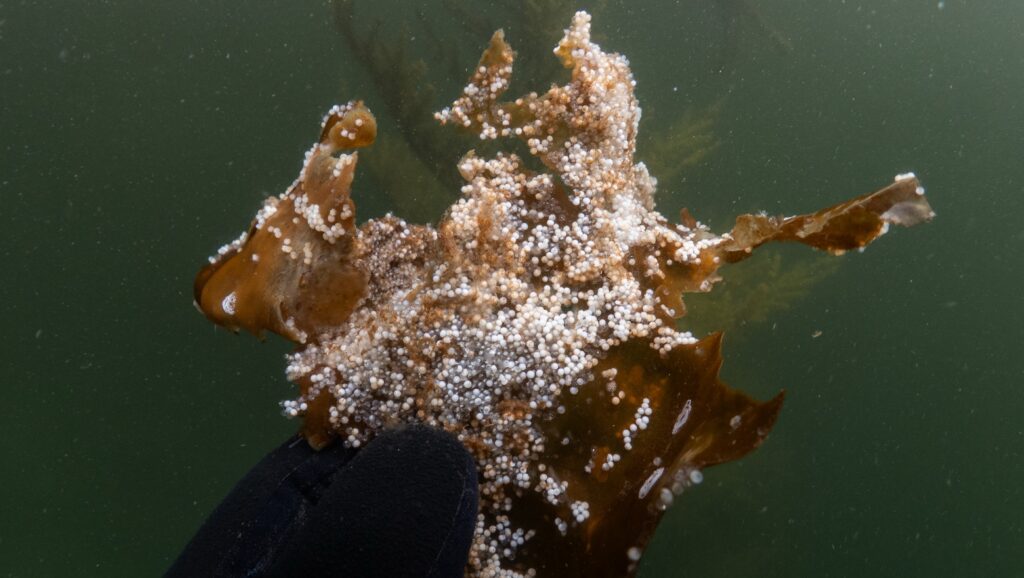
Not only do these additions slow erosion, but they also create more suitable forage fish spawning grounds and improve the beach’s walkability.
Phase 2 of the project will focus on the nourishment of Little Cates’ beach. This work is set to begin at the end of the summer, when impacts to fish are minimal. As opposed to barges, sand and gravel will be delivered via trucks.
In the meantime, a contractor will be planting dune grass and additional riparian plants at Roche Point. In addition, the District of North Vancouver’s park staff will be top dressing the existing lawn and monitoring the new seeding (the turquoise dirt in the above images) to ensure a healthy lawn come summertime.
For questions or comments about the project or the event, please reach out to Arthur Denèfle, səlilwətaɬ Environmental Specialist – Parks Planner, at adenefle@twnation.ca.